
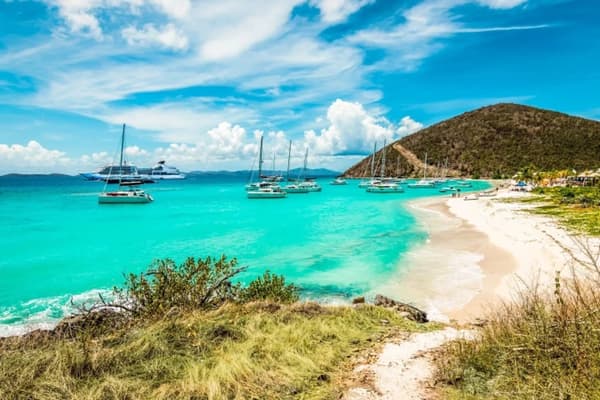
The U.S. Virgin Islands (USVI) is one of the Caribbean's most rewarding sailing destinations, offering 117 miles of pristine coastline, powder-white beaches, and crystal-clear waters teeming with sea turtles and tropical reef fish.
Whether you're planning a St. Thomas bareboat sailing charter, a skippered sailing holiday, or a fully crewed luxury yacht escape, the USVI delivers effortless island-hopping between St. Thomas, St. John, St. Croix, and Water Island under steady Caribbean trade winds.
The best time to sail is mid-December through late April, when conditions are at their finest, though the islands reward visitors year-round with warm waters, vibrant culture, and world-class anchorages. This complete guide covers everything you need to plan your perfect USVI sailing holiday, from licensing requirements and local regulations to a recommended 7-day itinerary and charter options to suit every budget and experience level.
| Category | Details |
| Best Time to Sail | Mid-December through late April (Steady trade winds 15–20 knots, minimal rain). |
| Main Islands | St. Thomas, St. John, St. Croix, and Water Island. |
| Starting Point | Compass Point Marina, St. Thomas. |
| Arrival Airport | Cyril E. King Airport (STT), St. Thomas (~25 min to marina). |
| Currency | U.S. Dollar (USD). |
| Entry (US Citizens) | No passport required (birth certificate + gov ID okay), but a passport is recommended. |
| Sailing Experience | Bareboat (requires resume/ASA/RYA), Skippered, or Fully Crewed. |
| Highlights | White sand beaches, sea turtle encounters, duty-free shopping, and shipwreck diving. |
Sailing conditions in the U.S. Virgin Islands are typically at their best from mid-December through late April, when the Christmas Winds ease into steady trade winds of around 15 - 20 knots and rainfall is minimal.
Hurricanes and tropical storms generally pose the highest risk between June and November, making early winter to spring the most popular window for chartering. During these months, you can enjoy warm, sunny days, clear waters, and calmer seas - perfect for island-hopping around St. Thomas, St. John, and St. Croix.
What are the sailing qualification and license requirements to charter a yacht or catamaran in the USVI? In the U.S. Virgin Islands, a formal sailing license is not always mandatory for bareboat charters, though some charter companies prefer that you hold an ASA (American Sailing Association) or RYA qualification for insurance purposes. More often, your sailing resume - outlining coastal navigation abilities, anchoring proficiency, and boat-handling experience - will determine approval.
Because the USVI’s waters feature relatively consistent trade winds and numerous protected bays, charterers can find conditions suitable for a wide range of skill levels. However, it is wise to brush up on local maritime regulations and best practices around coral reefs to ensure a safe, environmentally conscious journey.
The U.S. Virgin Islands blend American, Caribbean, and African cultural influences, reflected in lively music festivals and colorful architecture. Stop at beach bars and local eateries to indulge in fresh mahi-mahi, conch fritters, and spicy Caribbean curries. St. Thomas’s Charlotte Amalie is known for duty-free shopping and restaurants serving barbecue with island flair, while St. John’s laid-back vibe highlights the natural beauty of its national park.
Listen for local calypso tunes or steel drum performances that underscore the islands’ vibrant cultural heritage - perfect for those seeking a relaxed yet flavorful USVI sailing vacation.
All yachts arriving from outside the U.S. customs zone must clear immigration at authorized ports. Harbor fees may apply, and certain national parks - like those around St. John - implement mooring-only policies to protect coral reefs. Always have your vessel’s registration and travel documentation at the ready; rangers or patrol officers may verify compliance. By respecting these straightforward rules, you’ll enjoy a carefree, regulation-friendly sailing escape through the U.S. Virgin Islands.
.webp)
Each year, discerning sailors and luxury travellers flock to the U.S. Virgin Islands - St. Thomas, St. Croix, St. John, and Water Island - to experience 117 miles of pristine coastline.
Renowned for powder-white beaches and kaleidoscopic coral reefs, the USVI combine tropical elegance with effortless onboard adventure, making them a perennial favourite for bespoke sailing vacations.
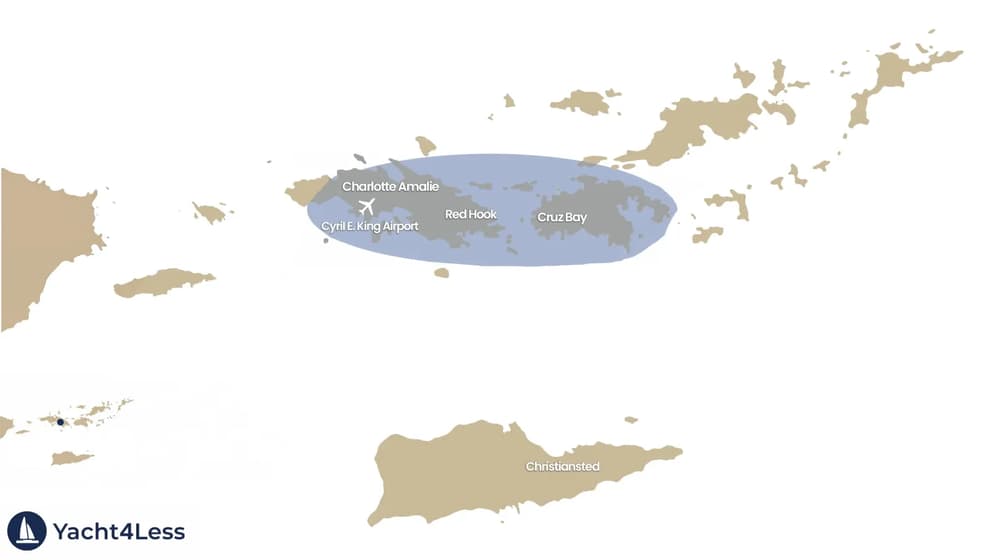
Your journey commences at Compass Point Marina on St. Thomas, easily reached via Cyril E. King Airport (STT). Direct flights operate from major U.S. hubs - Miami, Fort Lauderdale, and Atlanta - while additional connections arrive through San Juan, Puerto Rico. Leading carriers serving the USVI include American Airlines, Delta Air Lines, United Airlines, and others.
Once on the island, reliable ferry links connect St. Thomas with neighbouring islands on frequent, budget-friendly schedules. A private transfer or taxi from STT to Compass Point Marina takes approximately 25 minutes.
Entry & Currency
As a U.S. territory, the USVI allows American citizens to travel without a passport, though you must present proof of citizenship -such as a raised-seal birth certificate and government-issued photo ID -when departing. Many find it simpler to carry a valid passport. International visitors should ensure they have a passport from their home country. All transactions are conducted in U.S. dollars (USD).
Marinas, Moorings & Anchorage
St. Thomas and St. Croix host full-service marinas, while St. John relies exclusively on anchorages and mooring buoys. Within Virgin Islands National Park waters, the National Park Service maintains 210 public moorings, with an additional 45 administered by the Reef Ecology Foundation. These moorings are complementary but typically closed to overnight use, so review any seasonal or time-of-day restrictions and associated fees in advance. Popular overnight anchorages include Caneel Bay, Francis Bay, and Maho Bay - note that recreational anchoring is limited to 14 days per 12-month period. For extended stays, you may apply for a one-month-long-term anchoring permit in designated zones.
Provisioning & Concierge Service
For self-provisioning, Pueblo Supermarkets - serving the USVI for over 50 years - operates two outlets, each on St. Thomas and St. Croix, offering groceries, fresh produce, and specialty items. Alternatively, let Yacht4Less handle your provisioning: we’ll stock your yacht to your exact specifications so that you step aboard with everything in place.
Day 1: St. Thomas - Caneel Bay & Maho Bay, St. John
Begin your Caribbean escape with a relaxed sail to the northern coast of St. John, anchoring first in Caneel Bay for snorkelling in calm waters. Continue to Maho Bay for the evening, where sea turtles, a sweeping white beach, and gentle tradewinds set the scene for an idyllic first night.
Day 2: Waterlemon Cay, St. John
Sail to Waterlemon Cay, one of the top snorkelling spots in the Virgin Islands, known for its thriving coral reefs and spotted eagle rays. Hike the Leinster Bay trail for stunning views and remnants of Danish colonial sugar plantations.
Day 3: Coral Bay, St. John
Cruise around to the eastern end of the island and anchor in Coral Bay, a bohemian enclave with rustic charm and untouched nature. Enjoy a laid-back evening at anchor with the option to go ashore for live music and local dining.
Day 4: Congo Cay, Carvel Rock, Mingo Cay - Magens Bay, St. Thomas
Explore the wild cays between St. Thomas and St. John, stopping to snorkel or dive at Carvel Rock’s dramatic underwater cliffs and Congo Cay’s reef-lined shores. Continue west to Magens Bay, one of the Caribbean’s most iconic beaches, and anchor in its calm, protected waters.
Day 5: Magens Bay, St. Thomas
Spend a full day enjoying Magens Bay, with options to paddleboard, kayak, or relax on the mile-long sandy beach. The bay’s scenic hills, warm waters, and sheltered anchorage make it perfect for slow, sun-soaked sailing days.
Day 6: Little St. James - Buck Island (St. Thomas)
Sail to the exclusive and uninhabited Little St. James for secluded snorkelling and reef exploration, followed by a stop at Buck Island. Here, you can swim among vibrant corals, sea turtles, and tropical fish in the protected marine park.
Day 7: Wreck of the Cartanza - Turtle Cove - Honeymoon Beach - Charlotte Amalie, St. Thomas
Spend your final day diving the Wreck of the Cartanza, snorkelling in Turtle Cove, or relaxing on Honeymoon Beach at Water Island. End your journey in Charlotte Amalie with a sunset drink overlooking the harbour and a final stroll through the historic capital’s cobbled streets.
If you’d rather relax entirely, skippered sailing holidays are widely booked, with knowledgeable local captains guiding you through calm back-bay waters, secluded coves, and historic harbors while sharing insider tips.
For the ultimate in luxury, fully crewed yacht charters provide a private yacht cruise complete with professional crew members - chef, mate, and captain, who handle navigation, provisioning, and personalized service, ensuring you enjoy an effortless, all-inclusive sailing holiday under the Caribbean sun.
The USVI closed out 2025 with nearly 3 million combined airline and cruise visitors, setting a strong foundation heading into the new year. For 2026, projections point to approximately 927,000 airline passengers and close to 1.96 million cruise arrivals, further cementing St. Thomas as one of the Eastern Caribbean's most visited ports of call.
On the yachting front, the territory's profile has never been higher: Caribbean Journal named the USVI both Caribbean Yachting Destination of the Year and Event Destination of the Year in 2025, while Tripadvisor ranked both Trunk Bay and Magens Bay among the top ten beaches in the world in its Travelers' Choice Best of the Best Awards. St. Croix also claimed the No. 6 spot on USA TODAY's 10Best list of Best Caribbean Islands to Visit in 2026, making the USVI one of the most decorated sailing destinations in the Caribbean right now.
For real-time availability and pricing on sailing yacht, catamaran, power catamaran, and motorboat deals, visit our real-time search engine. This tool allows you to explore the best charter options instantly and secure your dream yacht charter with ease.
The yachting community's most-asked questions, answered by our experts.
The USVI offers 117 miles of pristine coastline, calm trade winds, and world-famous beaches - ideal for both first-time sailors and luxury yacht charters.
Mid-December to April is the prime season, with steady 15-20 knot trade winds and little rain. June–November is hurricane season, best avoided for charters.
A license isn’t legally required, but most companies ask for an ASA, RYA, or solid sailing resume. If unsure, you can book a skippered charter.
Expect steel drum music, Carnival events, and cuisine like conch fritters, barbecue, and fresh mahi-mahi. Charlotte Amalie offers shopping and nightlife, while St. John provides a relaxed, nature-rich vibe.
Yes. Customs clearance is required if arriving internationally. National parks enforce mooring-only policies to protect coral reefs, and anchoring is limited in certain bays.
Most charters begin at Compass Point Marina on St. Thomas, just 25 minutes from Cyril E. King Airport. Ferries connect to St. John and nearby islands.
Sea turtles, spotted eagle rays, dolphins, and tropical reef fish are common. National Park waters in St. John are top snorkeling and diving spots.
Highlights include Caneel Bay, Maho Bay, Waterlemon Cay, Magens Bay, Buck Island, and Honeymoon Beach - each offering unique snorkeling and beach experiences.
Bareboat charters start around €3,000/week, while crewed catamarans and luxury yachts can exceed €15,000/week, depending on yacht size and season.
While many sailors navigate their own charter between the islands, there are frequent ferry services for those meeting their crew. Regular ferries run from Red Hook and Charlotte Amalie on St Thomas to Cruz Bay on St John. These services are reliable and take between 20 and 45 minutes, depending on your departure point.







.webp)