
Browse Croatia Yacht Charter Deals
Choosing between a Split yacht charter and a Dubrovnik yacht charter is the most important planning decision you will make for a Croatian sailing holiday. While both regions share the same crystal-clear Adriatic waters, they offer very different sailing conditions, marina capacities, daily mileage requirements, and weekly budgets.
Whether you are a bareboat skipper looking at prevailing wind knots and anchorage holding ground, or a group of friends comparing catamaran availability and nightly mooring fees, this guide breaks down the exact nautical and financial differences between Central Dalmatia (Split) and Southern Dalmatia (Dubrovnik).
| Nautical Parameter | Split Basin (Central Dalmatia) | Dubrovnik Basin (Southern Dalmatia) |
| Primary Cruising Grounds | Šolta, Brač, Hvar, Pakleni Islands, Vis, Biševo, and Korčula. | Elaphiti Islands (Koločep, Lopud, Šipan), Mljet National Park, Pelješac Peninsula, Korčula, and Lastovo. |
| Charter Fleet Supply | Massive (~2,000+ charter yachts across Split, Kaštela, Trogir, and Baotić). | Limited (~350 charter yachts concentrated in ACI Marina Komolac and Marina Frapa Dubrovnik). |
| Summer Prevailing Winds | NW Maestral averaging 12 to 20 knots (Force 4 to 5 Bft); Venturi acceleration up to 25 knots in the Hvar and Brač channels. | NW Maestral averaging 10 to 16 knots (Force 3 to 4 Bft) inside the Elaphiti channel; up to 22 knots in the Pelješac channel. |
| Average Weekly Mileage | 110 to 135 NM (average 15 to 22 NM per day). | 85 to 115 NM (shorter legs of 10 to 18 NM per day in sheltered waters). |
| Anchorage Holding Ground | Coarse sand, mud, and Posidonia seagrass over limestone shelves; deeper drops (8 m to 15 m) requiring shore lines in narrow coves. | Excellent fine sand and tenacious mud/clay bottoms in Lopud, Šipan, and Mljet at shallower depths (4 m to 10 m). |
| ACI Marina Berth Fees (Peak) | €130 to €165/night (45ft monohull); €240 to €320/night (42ft catamaran). | €110 to €150/night (45ft monohull); €210 to €275/night (42ft catamaran). |
| Airport Transfer Logistics | 10 to 15 minutes from Split Airport (SPU) to Trogir and Kaštela; 30 minutes to ACI Split. | 25 to 35 minutes from Dubrovnik Airport (DBV) to ACI Komolac or Gruž Harbour. |
Understanding the local wind systems of the eastern Adriatic is critical when deciding where to start your charter. Both Split and Dubrovnik are governed by three main wind patterns, though local island topography changes how they behave on the water.
1. Summer High Season (July & August) / The Thermal Maestral:
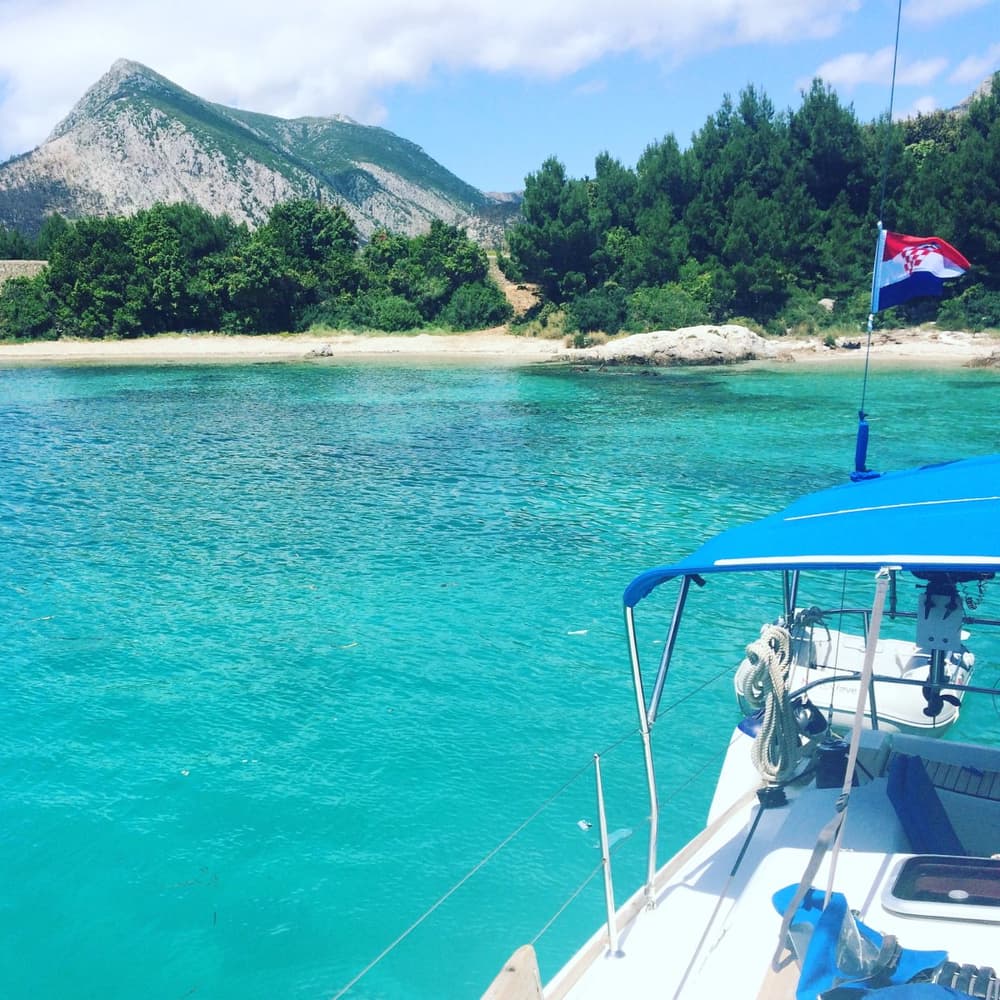
During peak summer, the northwest thermal wind known as the Maestral dominates both cruising areas. It typically builds around 11:00 AM, peaks between 2:00 PM and 5:00 PM, and dies down completely at sunset, leaving calm nights at anchor. In the Split basin, the Maestral averages 12 to 20 knots (Force 4 to 5 Bft). However, because the high mountain ridges of Brač and Hvar funnel the airflow east-to-west, a strong Venturi effect accelerates the breeze to 22 to 25 knots (Force 6 Bft) in the Split Gate, the Hvar Channel, and the Korčula-Pelješac channel. In contrast, Dubrovnik's Elaphiti archipelago sits behind a protective chain of islands, keeping summer afternoon winds slightly milder at 10 to 16 knots (Force 3 to 4 Bft) with minimal swell.
2. Shoulder Seasons (April, May, June, September & October) / Bora & Jugo:
In spring and autumn, thermal breezes occasionally give way to two stronger regional winds:
Croatia boasts the most developed marina infrastructure in the Mediterranean, yet dockage density and nightly costs vary significantly between Central and Southern Dalmatia.
Split Basin Infrastructure:
The wider Split area acts as the super-hub of Adriatic yachting. Instead of a single departure port, charter fleets are spread across four major bases: ACI Marina Split (next to the historic Diocletian's Palace), Marina Kaštela (20 minutes from the airport, built with wide fairways ideal for catamarans), and the Trogir cluster (ACI Marina Trogir, SCT Trogir, and Marina Baotić, just 10 minutes from Split Airport). Out on the islands, you have full-service marinas at Milna (Brač), Palmižana (Pakleni Islands), and Vrboska (Hvar), all offering 220V shore power, fresh water, fuel docks, and diver support.
Dubrovnik Basin Infrastructure:
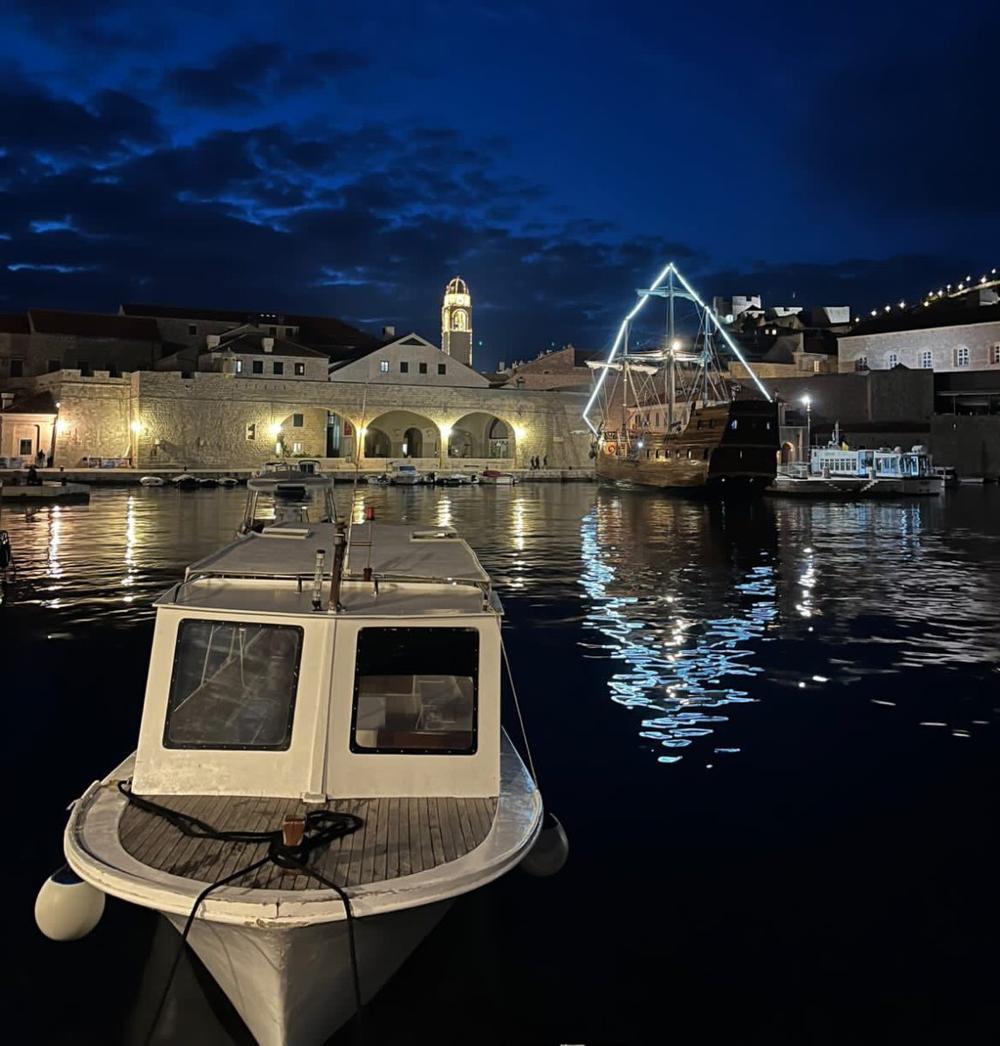
Dubrovnik has far fewer full-service marinas. Almost 85% of bareboat and skippered charter yachts depart from ACI Marina Dubrovnik (Komolac), situated 3 NM inland up the sheltered Rijeka Dubrovačka fjord, with the remainder based at the upscale Marina Frapa Dubrovnik in Gruž. Once you sail north into the Elaphiti Islands and Mljet, there are zero full-service marinas until you reach ACI Marina Korčula (45 NM away) or ACI Marina Slano on the mainland. Instead, Dubrovnik sailors rely on picturesque town quays, restaurant jetties (where mooring is often free if you dine ashore), and national park mooring buoys.
| Mooring Type / Location | 45ft Monohull (13.5m) | 42ft Catamaran (12.8m) |
| ACI Marina Split / ACI Palmižana (Hvar) | €140 to €165 / night | €260 to €320 / night |
| ACI Marina Dubrovnik / ACI Korčula | €115 to €140 / night | €220 to €275 / night |
| Town Harbours (Vis, Stari Grad, Komiža, Bol) | €55 to €80 / night | €100 to €140 / night |
| Official Concession Mooring Buoys | €45 to €70 / night | €70 to €110 / night |
| Mljet & Lastovo National Park Quays | €70 to €100 (includes Park tickets) | €110 to €150 (includes Park tickets) |
Budget Takeaway: A week-long charter out of Split typically spends 25% to 35% more on mooring fees than a Dubrovnik charter, simply because Central Dalmatia has more high-end marinas (like Palmižana, Hvar, and Milna) where crews choose to dock, whereas Dubrovnik itineraries rely heavily on free anchorages and restaurant jetties in Mljet and Šipan.
If you prefer dropping the hook in quiet bays rather than paying marina rates every night, the seabed composition between Split and Dubrovnik differs noticeably.
Split Basin Seabed & Holding:
Dubrovnik Basin Seabed & Holding:
To help you compare daily time under sail, here are the three classic 7-day Dalmatian routes with exact nautical mileage (NM) per leg:
Option 1: The Classic Split Round-Trip (Total: ~118 NM)
Ideal for lively island-hopping, historic Venetian towns, and active afternoon sailing.
Option 2: The Relaxed Dubrovnik Round-Trip (Total: ~100 NM)
Ideal for families, nature lovers, pine-clad national parks, and shorter daily passages.
Option 3: The One-Way Split to Dubrovnik Route (Total: ~135 NM)
If you want to see both Hvar and Dubrovnik in a single week without backtracking against the northwest Maestral, book a one-way charter starting in Split and disembarking in Dubrovnik (hitting Brač, Hvar, Vis, Korčula, Mljet, and Šipan along a predominantly downwind trajectory). Keep in mind that fleet operators charge a one-way relocation fee of €450 to €900, and you must book 6 to 9 months in advance due to limited one-way hull pairings.
When it comes to fleet supply and weekly charter rates, Split holds a major advantage over Dubrovnik. Because over 2,000 charter yachts are based in the Split-Trogir-Kaštela triangle, high competition between operators keeps prices competitive and gives you a huge selection of brand-new catamarans (such as the Lagoon 42, Bali 4.2, and Bali Catspace) and performance monohulls.
In Dubrovnik, where the total fleet sits around 350 boats, catamarans sell out for July, August, and September by early spring. Because supply is tighter in the south, weekly charter base rates in Dubrovnik are typically 10% to 15% higher than identical models in Split.
Weekly bareboat charter price ranges depending on the time of year you charter:
You might also like: Yacht charter Cost - The Ultimate Guide to saving money
Keep an eye out for exclusive Yacht4Less deals for early-bird bookings, loyalty discounts, and last-minute offers! At Yacht4Less we guarantee the best price possible for your Croatian sailing holiday.
*Prices are indicative only and may vary by yacht year of build, specification, and/or change without notice.
Closing: Which Croatian Base Should You Choose?
Choose Split if you want the widest selection of modern catamarans, lower base charter prices, a 15-minute airport transfer, and iconic island towns like Hvar, Vis, and Brač with brisk 15-knot afternoon sailing. Choose Dubrovnik if you prefer shorter daily passages in calmer waters, pine-covered anchorages with sandy and mud bottoms in Mljet and the Elaphiti Islands, and lower weekly marina bills. Contact the Yacht4Less team today to compare real-time availability in both Split and Dubrovnik!
The yachting community's most-asked questions, answered by our experts.
To skipper a bareboat yacht in Croatia, the Croatian Ministry of the Sea requires two separate original documents: a recognized skipper license (such as an ICC, RYA Day Skipper, ASA 104, or an approved national equivalent on the official Croatian ministry list) and a separate VHF Short Range Certificate (SRC). Even if your sailing license includes radio training, port authorities require a standalone VHF certificate on board, though it can be held by either the skipper or a designated co-skipper on your crew list.
Yes, and during July and August, booking berths 24 to 48 hours ahead is highly recommended if you want to avoid circling full harbors late in the afternoon. All ACI Marinas (including Split, Dubrovnik, Palmižana, and Korčula) allow advance online reservations through the official ACI App for a small booking surcharge. For private bays, national park mooring buoys, and popular konoba (tavern) jetties on islands like Vis, Hvar, and Šipan, skippers commonly use apps like MySea and Navily or call the restaurant directly on VHF or WhatsApp by midday to reserve a table and a complimentary stern-to mooring.
Every charter yacht in Croatia must be returned with a full tank of diesel on Friday afternoon, which creates notorious bottleneck queues at the main city fuel docks in Split Port and Gruž Harbour (Dubrovnik) between 2:00 PM and 6:00 PM. When sailing out of Split, experienced skippers avoid the city queue by refueling at Rogač (Šolta) or Milna (Brač) on Friday morning before crossing the Split Channel, or by using the dedicated fuel stations inside Marina Kaštela and Trogir. In Dubrovnik, there is an INA fuel dock directly outside ACI Marina Komolac at Rožat, so topping up early on Friday morning before the afternoon rush saves up to two hours of waiting in line.
In addition to your weekly charter fee, Croatian yacht charters require two mandatory local payments during check-in at the base: the Transit Log (or Charter Pack) and the Croatian Tourist Tax (Boravišna pristojba). The Transit Log typically ranges from €220 to €450 depending on yacht size and covers final cleaning, bed linen, towels, cooking gas, diver hull inspection, and e-Crew port registration. The Croatian Tourist Tax is set by the government at €1.33 per adult per day (with a 50% discount for children aged 12 to 18, and free for children under 12).
Only select charter yachts are legally insured and cleared for international cross-border sailing from Dubrovnik into Montenegro (such as the Bay of Kotor, Tivat, and Budva). If you plan to cross the border, you must request a yacht with territorial waters clearance at the time of booking so the operator can issue the required international charter permit and insurance extension (usually costing €150 to €300). On the water, you must clear out of Croatian customs at Cavtat or Gruž port, hoist the yellow Q-flag upon entering Montenegrin waters, and purchase a Montenegrin vignette at Zelenika port before dropping anchor.
Provisioning is effortless at both hubs. ACI Marina Dubrovnik (Komolac) has a well-stocked Tommy supermarket right inside the marina complex, allowing you to wheel your shopping cart directly to your gangway. In the Split region, Marina Kaštela and the Trogir marinas sit within a 5-minute walk of large Konzum, Tommy, and Lidl hypermarkets, plus Trogir's open-air farmers' and fish market. If you prefer not to spend Saturday afternoon shopping in the summer heat, Yacht4Less can arrange online advance provisioning so your food, wine, and cold drinks are stowed inside your yacht's fridge before you even arrive from the airport.


