Browse Boat Rental Deals in the Mediterranean
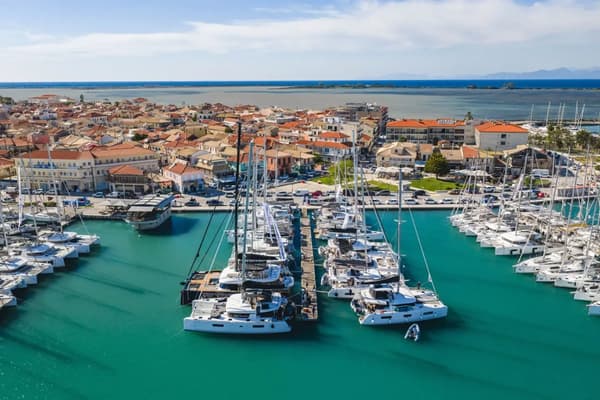
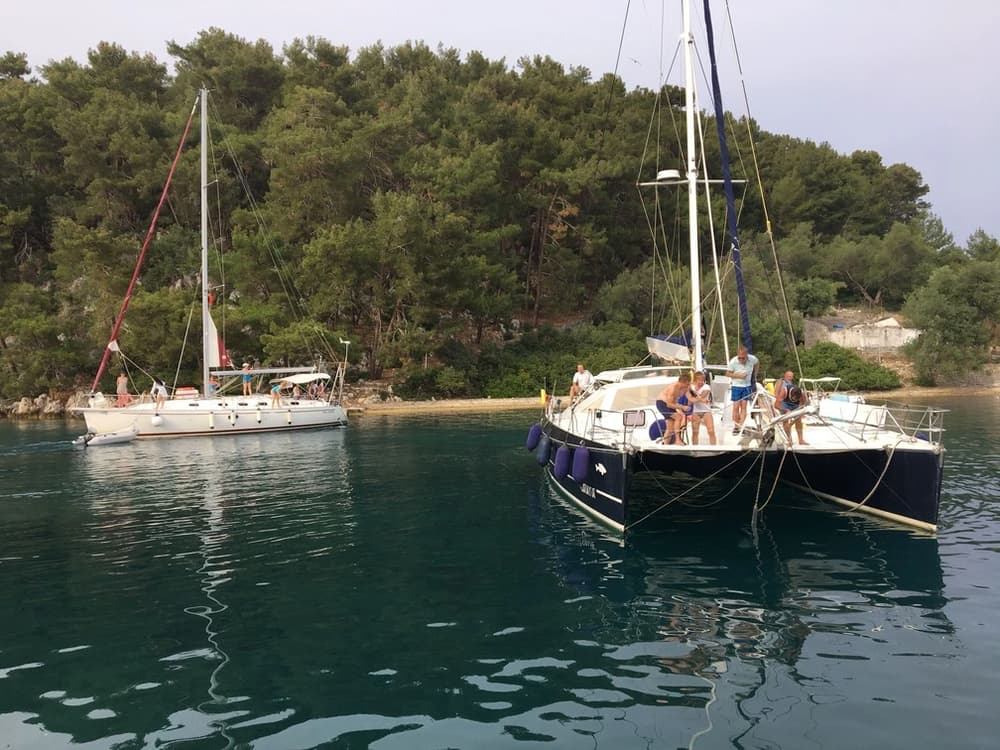
Mediterranean mooring (“Med mooring”) is the standard way yachts berth across Croatia, Greece, Italy, France, Spain and Turkey. Because the Mediterranean has almost no tide, boats berth stern-to (occasionally bow-to) using either their own anchor or a marina lazy line, rather than tying up alongside a dock. This packs far more yachts into a small harbour and gives everyone easy access ashore from the stern.
For most charter guests it comes down to three things: drop the anchor (or pick up the lazy line) about three to five boat lengths out, reverse in slowly, and secure two stern lines to the quay. Marina staff ( or people from nearby yachts) usually help with the final approach.
Unlike Northern Europe or North America, where boats often tie up alongside a dock, Mediterranean marinas use a different approach. Because tidal movement is minimal across most of the Mediterranean, boats can safely berth perpendicular to the quay, fitting far more yachts into a relatively small harbour.
The most common configuration is:
This is stern-to mooring, and it is what most charter guests encounter on a sailing holiday. You will occasionally see bow-to mooring, particularly where water depth near the quay is uncertain or local harbour rules require it.
“Med mooring” usually refers to stern-to berthing, but there are four main ways you will secure your yacht during a Mediterranean charter.
Comparison of Mediterranean Mooring Options
|
|
|
|
|
|
|
|
|
|
|
|
|
|
|
|
|
|
|
|
|
|
|
|
|
Marinas provide the easiest and most predictable option. Typical facilities include electricity, fresh water, toilets and showers, restaurants, fuel stations, laundry, security and Wi-Fi.
Most Mediterranean marinas use either stern-to mooring with lazy lines or stern-to mooring using your own anchor. For first-time bareboat charterers, marinas are often the least stressful option because staff frequently assist with docking. Larger marinas usually charge the highest mooring fees.
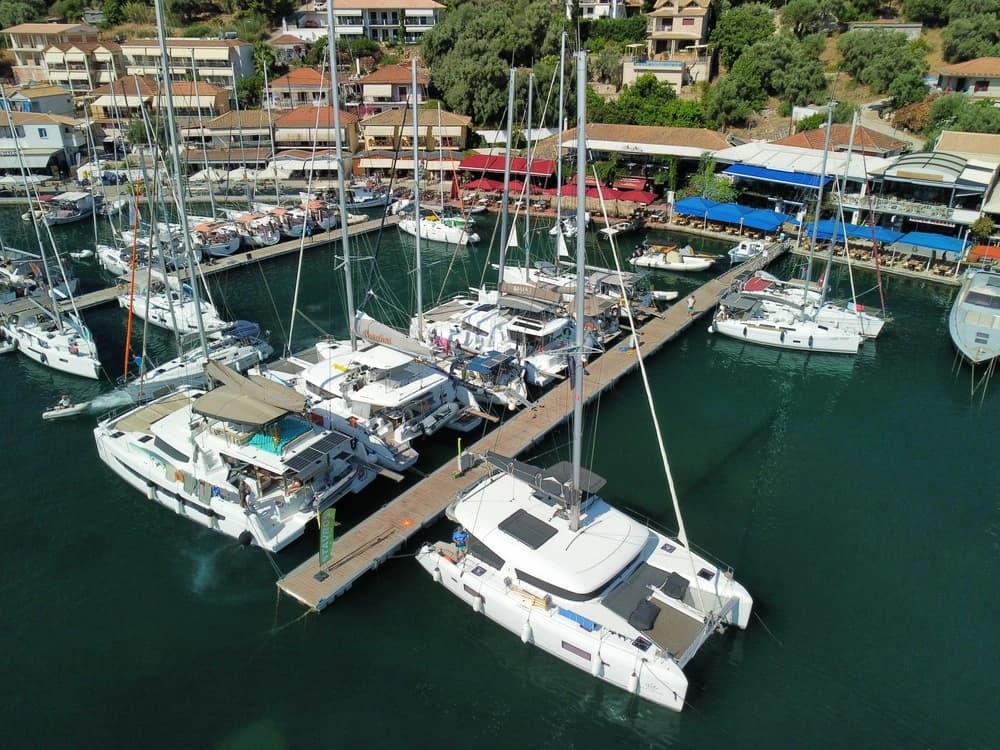
Town quays offer one of the most authentic Mediterranean experiences. Instead of a private marina, you berth directly along the waterfront of a traditional coastal town. Advantages include walking distance to restaurants, local atmosphere, lower prices and charming historic harbours. Most town quays require traditional stern-to mooring using either your anchor or lazy lines. In some cases, like Meganisi island in the Ionian, you can also moor at a restaurant jetty for free, with the “obligation” to dine at the restaurant.
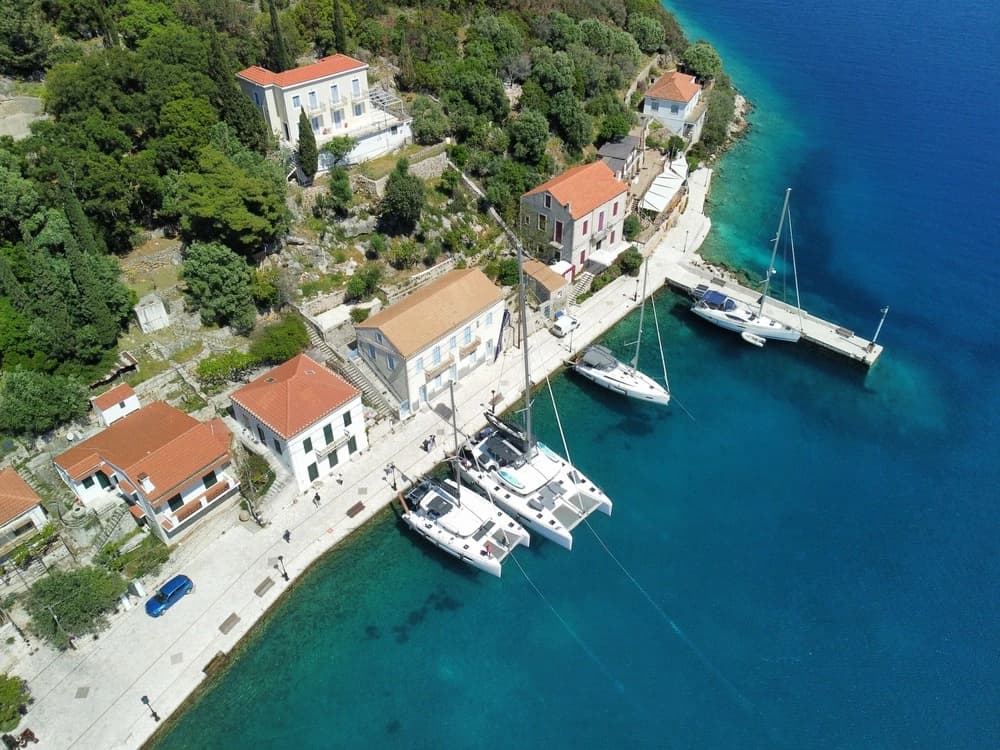
The main difference between mooring at a town quay versus an organised marina is that the marina offers the option to pre-book a berth and not have the stress of finding a spot when you arrive.
Many protected bays, especially in Croatia, now use organised mooring buoy fields. Instead of anchoring, you simply attach your yacht to a permanently installed buoy. Benefits include an easier approach than anchoring, protection of sensitive seabeds, less risk of dragging anchor, and generally quieter surroundings than a marina. They are particularly common around marine parks and environmentally protected areas and often less expensive than marinas or town quays.
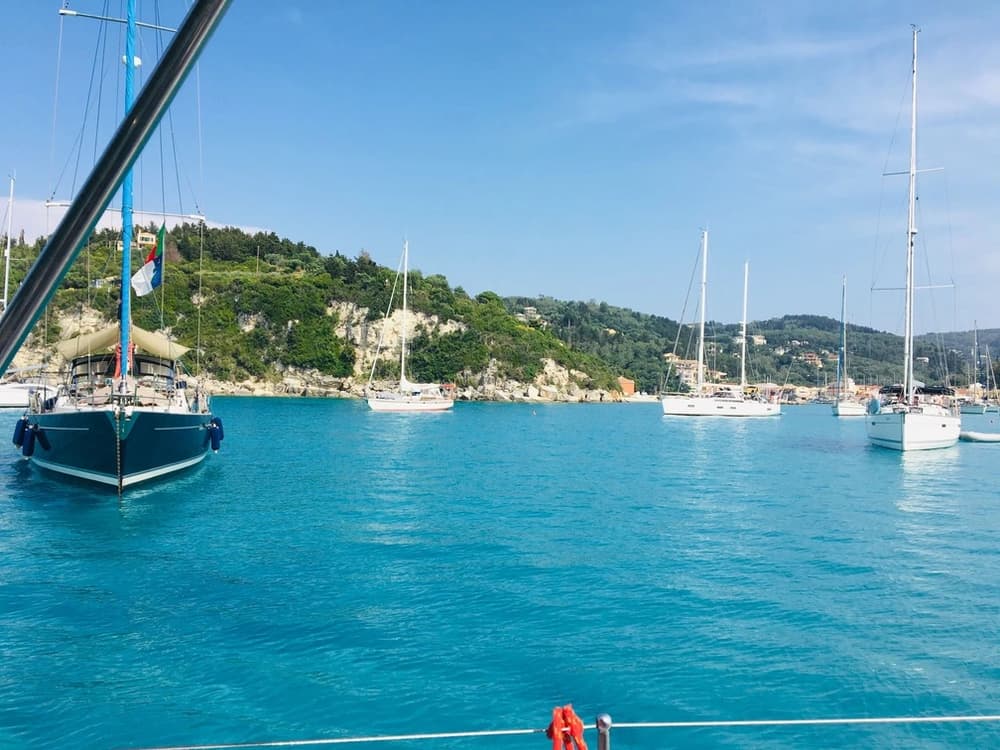
For many sailors, anchoring remains the highlight of a Mediterranean yacht charter. Remote bays offer complete freedom, spectacular scenery and peaceful overnight stays. Responsible anchoring matters more each year because of tightening environmental regulations (see the Posidonia section below), so always:
|
|
|
|
|
|
|
|
|
|
|
|
|
|
|
|
|
|
|
|
|
Stern-to mooring may look intimidating at first, but with preparation and teamwork it quickly becomes second nature.
Step 1 - Prepare the Crew
Before entering the harbour: assign responsibilities, prepare stern lines, put fenders out, ready the anchor or boat hook, and brief everyone onboard about their role during mooring and the importance of listening to the captain. Good communication often makes the biggest difference.
Step 2 - Approach Slowly
Approach the berth at low speed while maintaining full control. If reversing, use short bursts of reverse, keep the yacht aligned, and monitor wind and cross-current. Avoid rushing.
Step 3 - Drop the Anchor
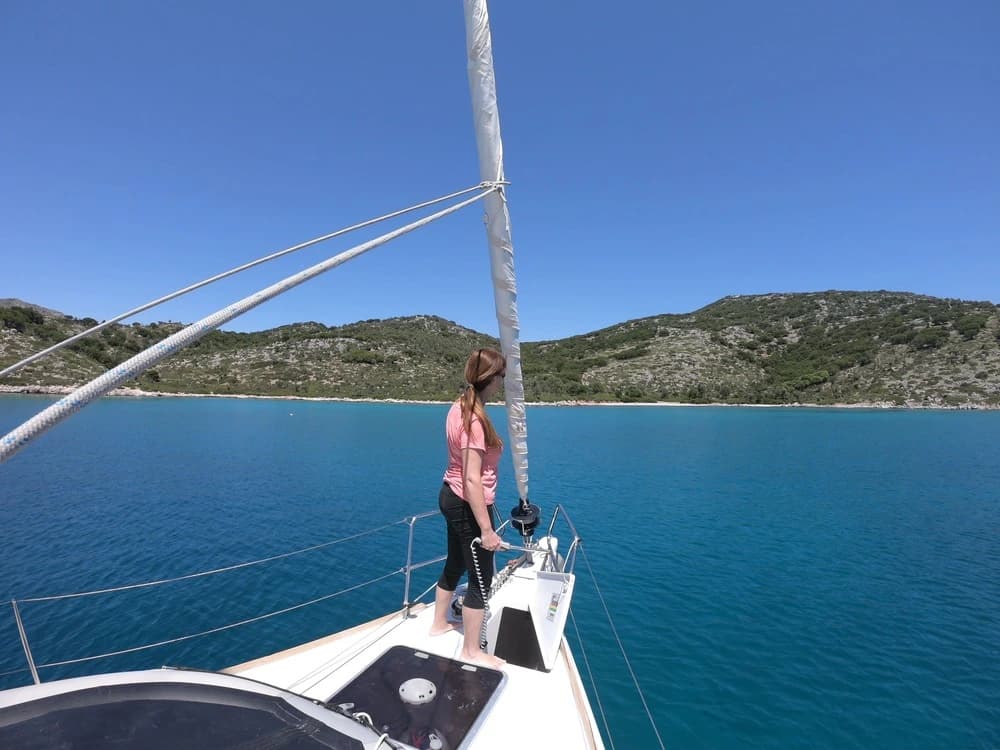
When approximately three to five boat lengths from the quay, lower the anchor and continue reversing slowly, allowing the chain to pay out gradually. Once you are about one boat length from the dock, the anchor should begin setting.
Step 4 - Secure the Stern Lines
Once close enough, pass the windward stern line ashore first, then secure the leeward line, and adjust both evenly. In crosswinds, securing the windward side first helps maintain control.
Step 5 - Tighten Everything
Finally, tension the anchor chain, centre the yacht, adjust stern lines, check fenders, and deploy the passerelle. Your yacht should now sit comfortably between neighbouring boats.
Many Mediterranean marinas use lazy lines instead of requiring boats to deploy their own anchor. A lazy line is a permanently installed mooring line attached to a heavy block on the seabed, with the other end secured to the dock. Rather than dropping an anchor, the skipper reverses toward the berth while a crew member picks up the lazy line with a boat hook and walks it forward to the bow cleat.
This system offers several advantages:
Lazy lines still need attention: always keep the line outside the guardrails and lifelines to prevent chafing or damage, and wear gloves, since marine growth can make the lines slippery and dirty. For first-time charterers, marinas with lazy lines are often easier than anchor mooring because the berth has already been prepared.
When dropping the mooring line back into the water before departure, allow enough time for it to sink before moving the boat and going over it with the propeller.
Mooring costs vary significantly across the Mediterranean depending on destination, yacht size, season and marina facilities.
|
|
|
|
|
|
|
|
|
|
|
|
|
|
|
Luxury marinas in destinations such as the French Riviera, Ibiza or Italy can exceed these figures considerably during peak summer. Marina fees are not included in the charter price and should be factored into the overall holiday budget.
> Read More: Yacht Charter Cost: Affordable Sailing Holidays with Yacht4Less
.webp)
Environmental rules around anchoring have tightened again this year, and enforcement is increasing across the region, so it is worth checking before you drop anchor anywhere unfamiliar.
Charter apps and official harbour master notices are the most reliable way to confirm whether a bay is currently open for anchoring. If in doubt, use a mooring buoy or marina berth instead.
Croatia has one of the Mediterranean's most developed marina networks, making it an excellent destination for first-time charterers. Expect modern marinas with lazy lines, well-maintained town quays, numerous anchoring bays, and mooring buoys in national parks. Popular charter regions include Split, Šibenik, Zadar, Dubrovnik and the Kornati Islands. During July and August, advance marina reservations are highly recommended.
> Read More: Sailing Holidays in Croatia
Greece offers a more traditional Mediterranean mooring experience. Many smaller harbours rely on stern-to mooring using your own anchor, town quays, fishing harbours, and limited marina infrastructure outside major cities. Strong afternoon winds (the Meltemi in the Aegean) can make docking more challenging in summer. The Ionian Islands generally provide calmer conditions and are popular among less experienced charter crews. As booking berths in advance is usually not an option (on a skippered or crewed charter, your crew may help via their local connections), going into your overnight anchorage early is very important.
> Read More: Sailing Holidays in Greece
Italy combines modern marinas with historic waterfront towns: marina berths in larger cities, charming town quays, higher prices in popular destinations, and good facilities throughout the season. Sardinia, Sicily and the Amalfi Coast often see high demand during summer.
> Read More: Sailing Holidays in Italy
Southern France offers premium marina infrastructure but also some of the Mediterranean's highest mooring prices, with excellent facilities, advanced reservations during peak season and busy harbours along the Côte d'Azur. Marinas around Nice, Cannes, Antibes and Saint-Tropez often book well in advance.
> Read More: Sailing Holidays in France
Spain provides an excellent balance between modern marinas and relaxed cruising. The Balearic Islands feature modern marinas, protected anchorages, mooring buoy systems and excellent sailing infrastructure. Certain environmentally protected bays now require official mooring buoys instead of anchoring under the 2026 Royal Decree noted above.
> Read More: Sailing Holidays in Spain
Turkey combines affordable marinas with spectacular natural anchorages. Many cruising routes include traditional town quays, marina resorts, quiet coves and restaurant jetties. The Turkish coast remains one of the Mediterranean's best destinations for sailors seeking long passages between peaceful overnight stops.
> Read More: Sailing Holidays in Turkey
Before mooring anywhere in the Mediterranean, always familiarise yourself with local regulations:
Many countries are introducing stricter environmental regulations to protect sensitive marine ecosystems, making responsible seamanship more important than ever.
Before Arrival
After Mooring
Even experienced sailors occasionally make mistakes when Med mooring. Some of the most common include:
Taking your time and preparing early will usually prevent most docking problems.
How Yacht4Less Helps You Prepare
Mooring know-how is only half the picture; choosing the right yacht and base matters just as much. Yacht4Less lists over 15,000 yachts across more than 50 destinations, with zero booking fees on every charter, so the price you see is the price you pay. Every listing carries the same 4.9-star Trustpilot rating behind it, backed by a booking-to-boarding concierge service that helps you pick a base with the marina infrastructure and mooring style that matches your crew's experience, from lazy-line marinas in Croatia to quieter anchorages in the Ionian.
Final Thoughts
Mediterranean mooring is one of the first skills every charter skipper learns, and mastering it opens the door to some of the world's most rewarding sailing destinations. While the technique may seem daunting at first, understanding the basics of stern-to docking, lazy lines, anchoring and local harbour etiquette quickly builds confidence.
Whether you are planning a bareboat charter through the Greek Islands, exploring Croatia's island-hopping routes, or cruising the coasts of Italy, France, Spain or Turkey, knowing what to expect before arriving at a harbour will make every docking manoeuvre smoother and less stressful.
At Yacht4Less, we help sailors of all experience levels find the right yacht and destination, from your first Mediterranean sailing holiday to another season on the water, with zero booking fees and concierge support from booking to boarding.
The yachting community's most-asked questions, answered by our experts.
Mediterranean mooring is a docking technique where yachts berth stern-to or bow-to the quay using either their own anchor or marina-installed lazy lines.
Lazy lines are permanently installed mooring lines attached to the seabed and used instead of deploying your own anchor.
It may seem intimidating at first, but with preparation and teamwork, most charter crews become comfortable after only a few attempts.
Yes. Sailing catamarans and power catamarans routinely use Mediterranean mooring throughout Europe.
In many locations, yes. However, some protected areas require official mooring buoys or charge environmental fees, and anchoring on Posidonia seagrass is banned across most of the Mediterranean.
They are not included. Marina fees, fuel and provisioning are typically separate from the charter price unless specifically stated.
No prior experience is required on a skippered charter, since the skipper handles the manoeuvre. On a bareboat charter, most charter companies expect at least basic docking experience or offer a check-out sail with an instructor before you set off.
Alongside mooring runs the full length of the hull against the dock, as is common in Northern Europe. Med mooring berths the yacht perpendicular to the quay, stern-to or bow-to, which fits far more boats into the same length of harbour wall.
As a rough guide, budget €60–€150 per night for a standard marina berth outside the most exclusive resorts, more if you plan to stay in premium marinas along the French or Italian Riviera, and little to nothing on nights spent at anchor or on a mooring buoy.
Move off as soon as you realise, since most regulations focus on the act of anchoring rather than an honest mistake. Repeated or large-vessel breaches in France, for example, can carry fines of up to €150,000, so it is worth checking a chartplotter app or asking the marina or charter base for local anchoring maps before you set out.
Croatia and the Ionian Islands of Greece are generally considered among the most beginner-friendly destinations, thanks to well-developed infrastructure and relatively predictable sailing conditions.
Choose a marina for full facilities and easy shore access. Choose anchoring or a mooring buoy for privacy, nature and lower costs.