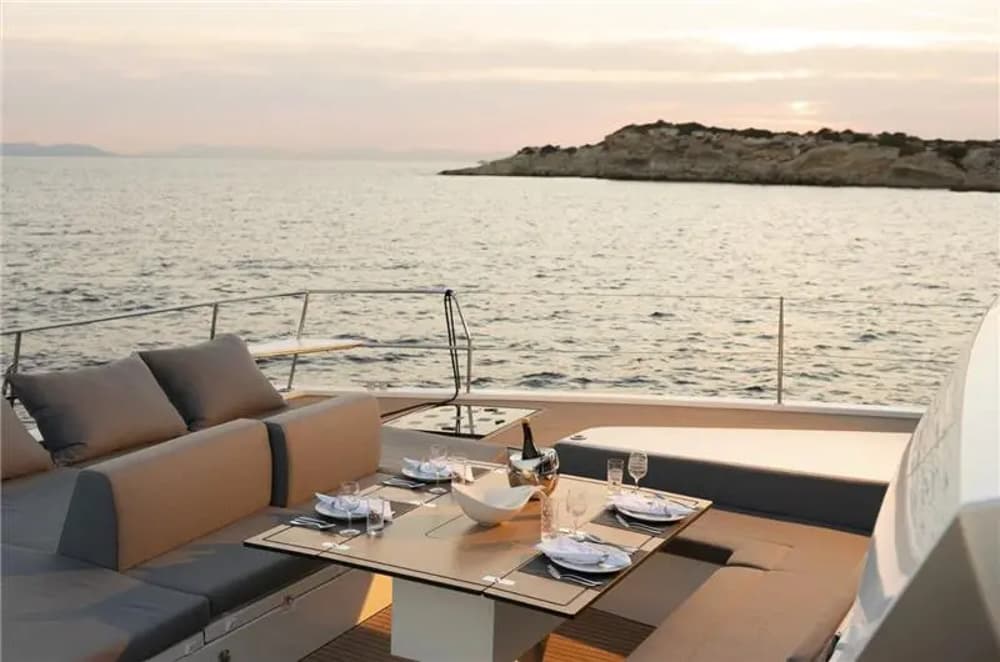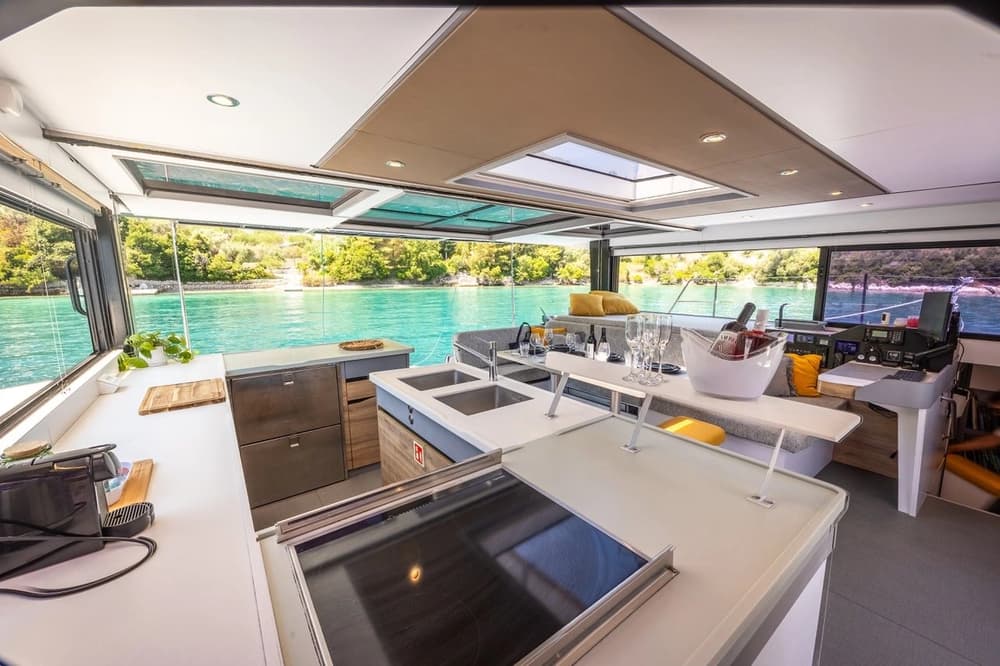
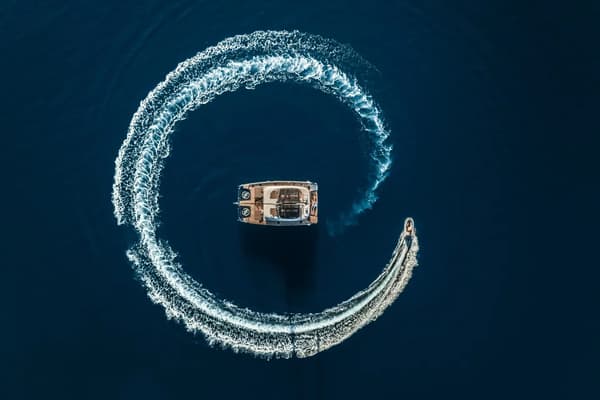
The new 2025-2026 catamarans span three distinct categories: family and cruising models, electric and hybrid yachts, and luxury, crewed yachts.
In the 37-50 ft cruising bracket, the Excess 11 hybrid, Excess 13, Fountaine Pajot New 41, New 44, Lagoon 43, Lagoon 38, and Lagoon 47 are the most charter-relevant new arrivals, with hybrid propulsion and improved interior layouts as the defining upgrades. The electric and hybrid segment is led by the Sunreef 60 Eco and Windelo 58/62, with the Leopard 46 Powercat offering the fastest power cat option for guests prioritising speed. At the luxury, premium end, the Bali 5.8, and Sunreef Ultima 55 bring premium specification into specialist and crewed charters.
Across all categories, the 2025-2026 generation is defined by the need for access to quieter anchorages, better use of onboard space, and a clearer match between boat design and how charter guests actually spend their week on the water.
Whether you are a first-time sailor or a seasoned cruiser, the new catamarans to charter offer something genuinely worth exploring.
This guide covers everything you need to know about the new 2025-2026 catamarans to charter, from family-friendly cruisers to electric luxury vessels.
For groups of four to eight people, the 37-50 ft catamaran remains the most practical and comfortable charter size. It offers enough cabin separation that couples or families have real privacy, enough cockpit space for group meals and sundowners, and a deck layout that does not feel crowded when everyone is on board at once. The new models entering this bracket in 2025 and 2026 have made meaningful improvements to exactly the things that matter most during a holiday week.
Best for: Couples, small families, and first-time catamaran charterers
Charter type: Bareboat and crewed
As one of the most compact cruising catamarans on the market, the Excess 11 is the perfect entry-level choice for an easy, budget-friendly charter. At just 37 feet, it is incredibly manageable to sail short-handed and maneuver in tight marinas, making it a favorite for monohull sailors transitioning to multihulls. Despite its smaller footprint, it provides all the essential comforts you need for a week on the water, featuring bright cabins and an open cockpit. It is an ideal platform for couples or small groups who want a straightforward, fun, and sporty sailing vacation without the bulk and expense of a larger vessel.
Best for: Active groups and families looking for a lively, modern multihull experience
Charter type: Bareboat and crewed
The Excess 13 sits at the crossover point between performance sailing and genuine onboard comfort. It is a fast catamaran with a well-considered interior that does not sacrifice liveability for speed. The layout works well for a group of six sharing three cabins, with enough cockpit space and saloon volume to feel comfortable during a full week on board. For charter guests who want passages that are genuinely engaging to sail, not just miles covered under engine, the Excess 13 is a strong choice in the 40+ ft bracket.
Best for: Couples and small groups looking for a nimble, easy-to-handle catamaran
Charter type: Bareboat and crewed
The Lagoon 38 enters the charter market as one of the most accessible new models of the cycle. At 38 feet, it is compact enough to be handled comfortably by a couple or a small group of four, while still offering the Lagoon standards of interior finish and layout that charter guests recognise. The cockpit is well designed for its size, and the saloon-to-deck flow makes it feel larger than its length suggests.
For guests who find larger charter catamarans daunting to handle or who are sailing in tighter, more sheltered areas - the Croatian islands, the Ionian, or quieter Caribbean anchorages - the Lagoon 38 is a genuinely practical and enjoyable choice. Availability in mainstream bareboat fleets is expected to grow through 2025 and 2026, making it one of the more accessible new models for first and second-time charterers.
Best for: Families, couples, and first-time catamaran charterers
Charter type: Bareboat and crewed
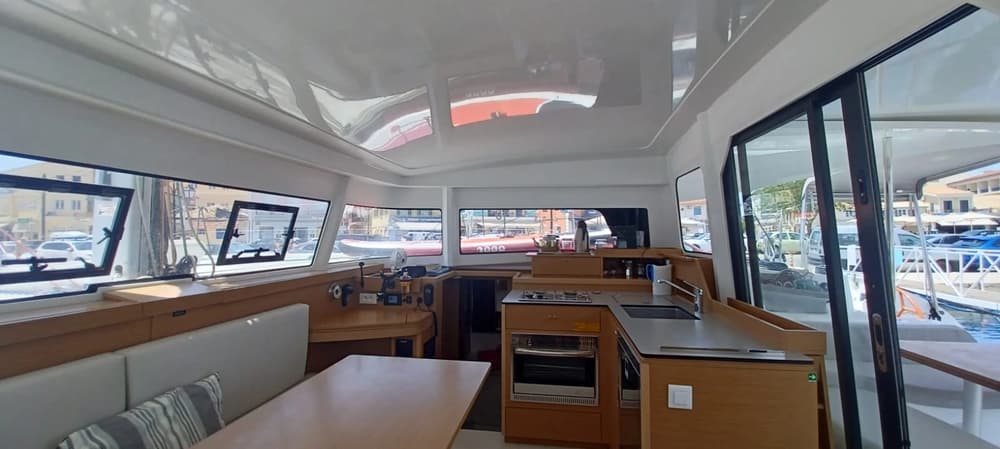
The New 41 is one of the most charter-relevant launches of 2025. From a guest perspective, the most noticeable upgrade is the interior; the circulation between the saloon, the cockpit, and the helm area feels genuinely open rather than squeezed. The forward cabin layouts have also improved, which matters a lot on a week-long trip where the couple in the bow cabin can feel the difference between a well-designed space and an afterthought.
The hybrid electric option has a direct benefit for charter guests that often goes unmentioned: quieter anchorages. In marinas and protected bays where most holidays are spent, running on electric rather than diesel means no engine noise during early mornings or late evenings. For anyone who has been woken at 6 am by a neighbouring boat's generator, this matters more than any spec sheet suggests.
Best for: Groups of four to six wanting a more generous layout
Charter type: Bareboat and crewed
The New 44 is a step up in ways that charter guests will feel immediately. The additional length translates into more generous sleeping cabins, a larger saloon table where a full group can sit together comfortably, and a cockpit that handles a week's worth of gear, snorkelling equipment, and guests without feeling cluttered. It is pitched slightly more toward the private charter market than volume fleets, which typically means better-maintained examples and a higher standard of onboard specification.
For couples or a group of four sharing two cabins, the New 44 provides a noticeably more relaxed sense of space than the 41. For groups of six sharing three cabins, it remains manageable without feeling like everyone is on top of each other.
Looking further ahead: Fountaine Pajot is expected to announce a massive triple launch in spring 2026: the FP 48, FP 55, and FPY 70s. These models are not yet in charter fleets, but guests planning holidays from late 2026 onwards should watch this space closely. The range spans from a refined mid-size cruiser to a large performance-luxury yacht, which will add meaningful new options across all charter brackets.
Best for: Guests who want to cover ground quickly and maximise time in the destination
Charter type: Bareboat and crewed
Twin diesel engines and cruising speeds around 23 knots make the Leopard 46 PC the fastest and most practically capable power cat in its size class. For charter guests who want to cover more ground during a week, get between islands quickly, and spend more time in the destination rather than in transit, it is a practical and enjoyable option. This model will be most relevant for guests in the Caribbean, the Balearics, or the Greek islands, where distances between destinations are meaningful, and weather windows can be short.
Best for: Families of up to 8, sailing bareboat or skippered, or those wanting an upgrade to the Lagoon 42
Charter type: Bareboat and crewed
The Lagoon 43 is the most familiar face in this generation and will likely be the most commonly available model across charter bases in the Mediterranean and Caribbean. Being the successor of the Lagoon 42, it is a proven and refined platform that most operators trust, and most guests find genuinely comfortable.
The layout updates in the 2024-2025 production cycle improve the helm station visibility and the saloon-to-cockpit connection.
Best for: Comfort-focused cruisers and groups seeking a premium private charter experience
Charter type: Bareboat and crewed
The Lagoon 47 steps up from the 43 with a noticeably more spacious layout, highly comfortable cruising capabilities, and a build quality that suits groups looking for a more private, owner-standard charter experience rather than a basic fleet boat. It is a strong choice for groups of six to eight who want the Lagoon reliability and living space they know in a larger, better-specified package.
Best for: Experienced sailors and guests with offshore ocean cruising itineraries
Charter type: Crewed
As a 2026 model engineered for serious offshore ocean cruising, this vessel is typically found through specialised private or owner-operated programs rather than standard charter fleets. The Outremer 48 is a faster, more performance-oriented boat and will appeal to charter guests who want to actually sail rather than motor between destinations. If your group includes experienced sailors who would rather be trimming sails than lounging at anchor, the Outremer 48 in charter offers a genuinely different, authentic sailing experience compared to a heavy production cruiser. The trade-off is that this is a more technical, less forgiving boat for guests who are entirely new to catamarans.
What to Expect in the 40-50 ft Charter Range
Electric and hybrid propulsion is entering charter fleets faster than most guests realise, and the on-board experience is meaningfully different from a conventional diesel catamaran. Whether that difference is a selling point depends on how and where you plan to sail.
Best for: Eco-conscious guests seeking a premium, silent luxury experience
Charter type: Crewed charter
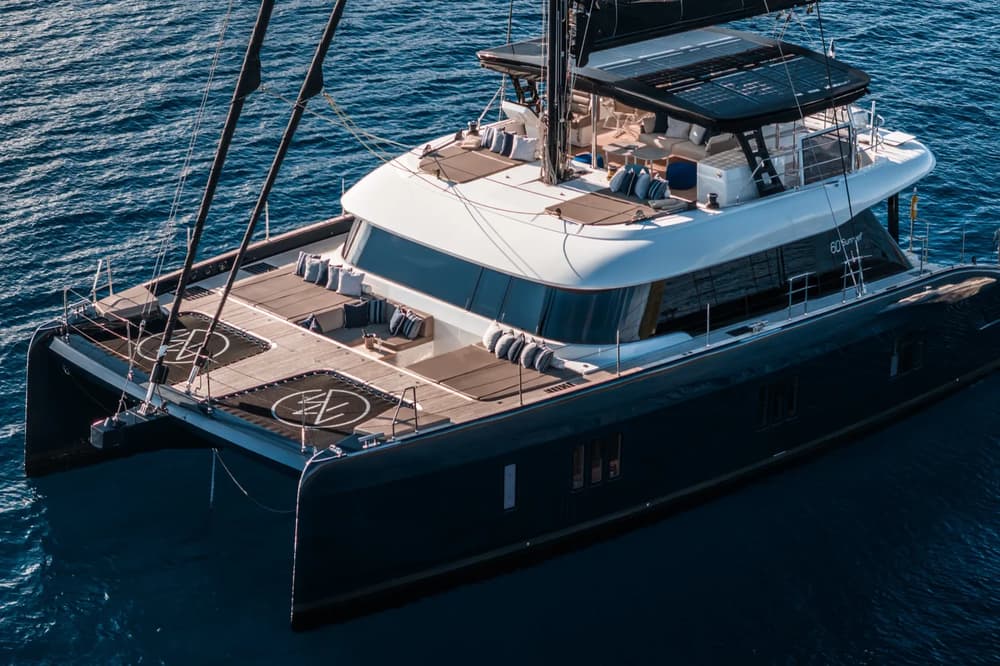
In practical terms, chartering the Sunreef 60 Eco means almost complete silence on the water, no diesel smell in the cockpit or saloon, and a different rhythm to the day that is hard to describe until you have experienced it. Its solar integration covers a significant portion of daily energy demand, enabling extended coastal cruising with zero fuel dependency.
It works best on itineraries within well-connected sailing areas where daily distances are predictable. The Croatian islands, the Greek Cyclades, and the BVI are ideal examples. For itineraries with long open-water legs or unpredictable schedules, it requires careful route planning, something a quality charter operator will discuss with you at the booking stage.
Best for: Guests who want to charter sustainably
Charter type: Crewed and specialist
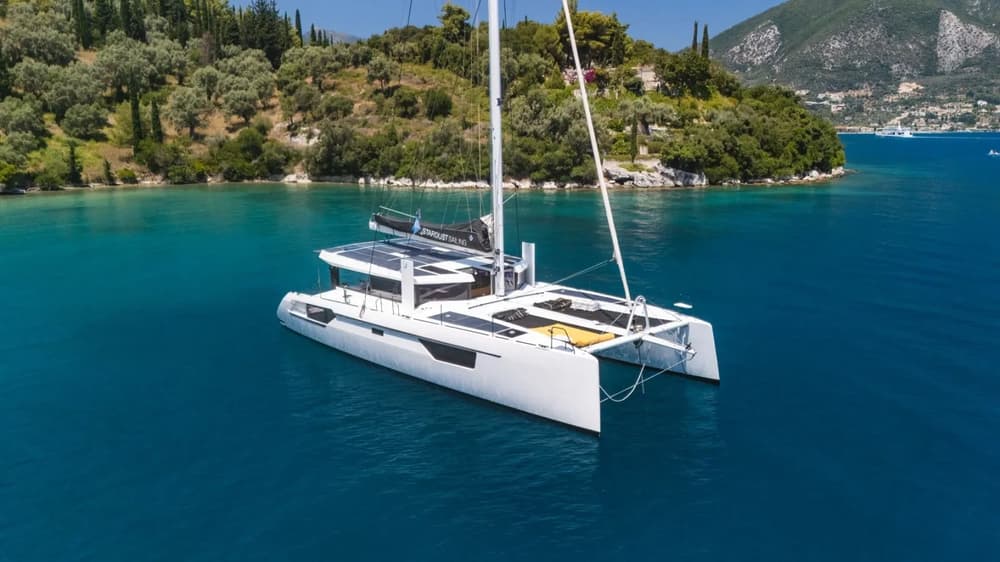
The Windelo models are hybrid sailing catamarans, which makes them arguably the most practical eco-option for charter guests who actually want to sail. Under sail, the hybrid system regenerates energy. In marinas and at anchor, the electric drive covers short-range maneuvering silently. On longer passages, diesel is available when conditions require it. For groups who want to charter sustainably without accepting the range constraints of a fully electric boat, the Windelo 58 or 62 is currently the strongest option on the market.
Eco-friendly: Key Charter Takeaways
> Find our more about Eco-friendly and Sustainable yachting
The Bali 5.8 and Sunreef Ultima 55 represent the premium tier of the 2025-2026 generation. These will not appear in standard bareboat fleets. They are found in specialist performance charter fleets and luxury crewed yacht charters.
Best for: Groups wanting a premium, spacious catamaran with a strong charter track record
Charter type: Specialist and crewed
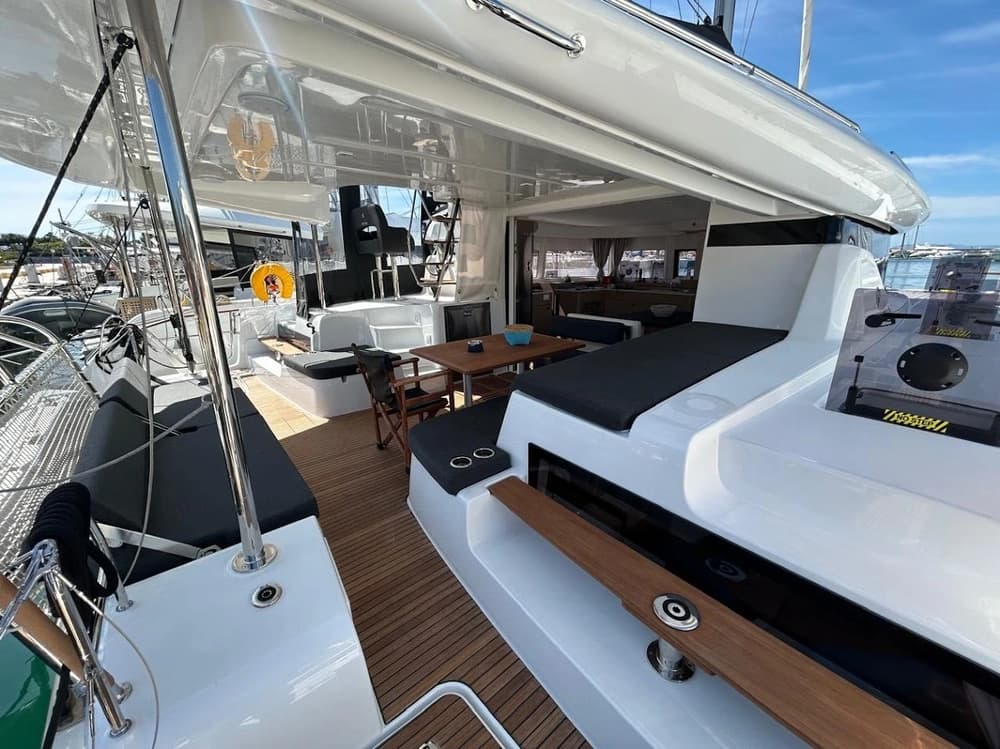
The Bali 5.8 had its world premiere at the Cannes Yachting Festival in September 2024, and the first units are now hitting major charter fleets in Croatia, Greece, and the BVI for their first full seasons in 2025 and 2026. As a semi-new model, it brings the Bali hallmarks that charter guests value (wide beam, generous volumes, and a social layout built around the cockpit and flybridge) in a larger, more capable package than earlier Bali models.
For groups of six to ten who want a genuinely spacious boat that feels more like a floating terrace than a conventional yacht, the Bali 5.8 is one of the most distinctive charter experiences in this generation. Its debut in high-demand charter bases means availability will be competitive, and early booking is advisable for peak dates.
Best for: Guests seeking the pinnacle crewed performance and luxury charter experience
Charter type: Crewed luxury
The Sunreef Ultima 55 operates at the top of the performance-luxury charter market. Built with carbon construction and available with an electric propulsion option, it delivers a level of engineering and finish that makes the boat itself part of the charter experience. Passage speeds, structural refinement, and on-water presence at this level are matched by very few production catamarans.
For charter guests who want faster passages, a more responsive sailing experience, and the kind of onboard specification that rivals the best boutique hotel suites, the Sunreef Ultima 55 in crewed charter is the clearest expression of what the 2025-2026 generation is capable of at the top of the market.
Luxury Crewed: Charter Suitability at a Glance
> Find out more about fully-crewed yacht charters
The practical message for anyone planning a catamaran charter is straightforward: the boats have genuinely improved. The interiors are better designed, the cockpits work more sensibly for groups, the propulsion options are quieter and cleaner, and the choice available across different experience levels and itinerary types is wider than it has ever been.
You do not need to understand the engineering behind carbon construction or hybrid propulsion systems to benefit from this generation. What matters is that the boats entering charter fleets right now are more thoughtfully designed around the experience of the people who will live on them for a week, which is you.
The charter market has historically asked guests to choose between comfort, sustainability, and sailing performance. The 2025-2026 generation is the first in which you no longer have to make that trade-off. The right boat for your group exists. The decision is simply about knowing which one it is. The new catamarans represent the most significant shift in charter fleet design in over a decade.
The yachting community's most-asked questions, answered by our experts.
The Fountaine Pajot New 41 and New 44, along with the Lagoon 43 and Lagoon 38, are entering bareboat charter fleets across the Mediterranean and Caribbean in 2025. The Leopard 46 Powercat is also available through established bareboat operators. The electric and performance models are more commonly found in skippered and crewed charter programs, which typically require a different booking approach and earlier reservation.
For the mainstream cruising models like the New 41, New 44, Lagoon 38, and Lagoon 43, prior catamaran experience is recommended but not always required, depending on the operator and destination. For performance and offshore-oriented boats like the Outremer 48, practical experience is genuinely important both for safety and for getting the most out of the boat. A crewed charter on any of these models removes that barrier entirely.
The Lagoon 47 and New 44 are the most family-friendly of the new generation, with layouts that provide good cabin separation, safe deck configurations, and cockpit spaces that work well when children are on board. The Lagoon 43 is also a strong family choice, given its broad availability and the familiarity most charter operators have with supporting it in service.
For guests who prioritise the quality of the on-water experience and have an itinerary that suits the range profile of an electric boat, the answer is consistently yes. The experience is meaningfully different and rated highly by guests who have done it. For guests with long daily distances or unpredictable schedules, a hybrid model like the Windelo or the Excess 11 Hybrid offers a better balance between sustainability and flexibility.
The Lagoon 43 and Fountaine Pajot New 41 will have the widest availability across established Mediterranean charter bases, including Croatia, Greece, Turkey, and the Balearics. The New 44, Lagoon 38, and Bali 5.8 will follow in most of the same markets through 2025 and into 2026. For electric and performance models, availability is more concentrated in specific bases and through specialist operators, so early enquiry is advisable.
A 2026 model catamaran charter typically costs between €6,000 and €15,000 per week for standard luxury models like Lagoon or Bali. Prices for flagship or larger 50ft+ vessels can exceed €25,000, depending on the season, destination, and whether you opt for a bareboat or crewed experience.
For the 2026 season, Greece and Croatia remain the top destinations for new catamaran charters due to their world-class marinas and modern fleets. The British Virgin Islands (BVI) are the premier winter choice for brand-new vessels, while emerging hotspots like Montenegro and Italy’s Aeolian Islands offer exclusive, less-crowded waters for luxury sailing.
The Bali 5.8 is designed around a social layout that prioritises the cockpit and flybridge as the primary living space, rather than the saloon below. This gives the boat a "floating terrace" feel that suits groups who want to spend most of their time outside, in the sun, with open views. Its wide beam delivers generous volume across all cabins, making it comfortable for groups of six to ten. It debuted at the 2024 Cannes Yachting Festival and is now entering its first full charter seasons in Greece, Croatia, and the BVI meaning charter guests in 2026 can access a virtually new boat in high-demand destinations.