Booking a catamaran charter is one of the most exciting ways to explore the world’s best sailing destinations, from the turquoise lagoons of the Caribbean to the sun-soaked islands of Greece. But before you set sail, there are a couple of questions and important decisions to make:
1. What is the difference between a sailing catamaran and a power catamaran?
2. Should I choose a sailing catamaran or a power catamaran for my next charter?
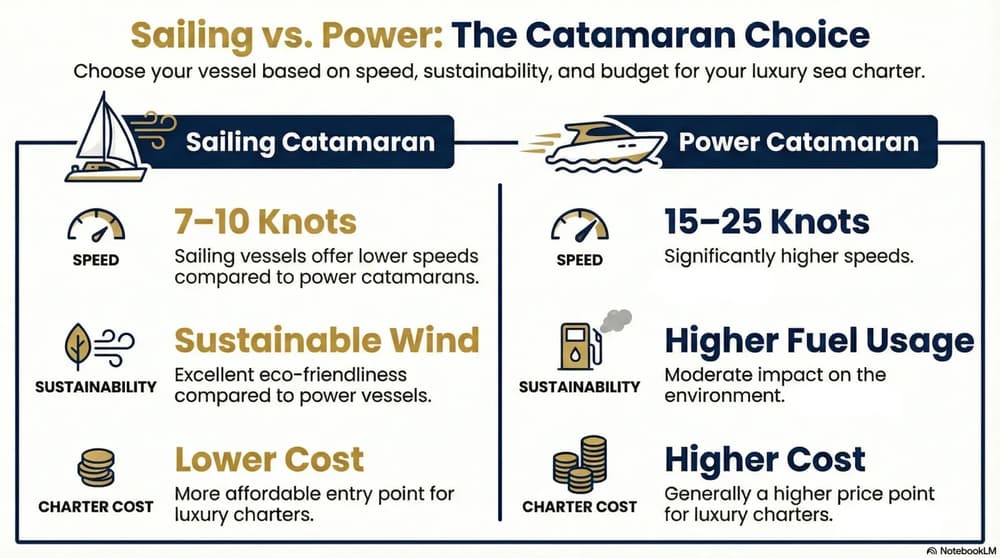
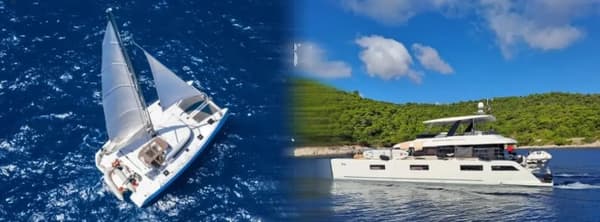
A sailing catamaran uses wind and sails, delivering authentic, eco-friendly cruising and hands-on fun, while also having powerful engines that can be used if needed. A power catamaran relies solely on its engines for effortless speed and predictable travel, making it ideal for covering longer distances or exploring far-flung destinations quickly and efficiently.
Both offer luxury, stability, and space, but they deliver very different experiences on the water. Whether you’re planning a romantic getaway, a family sailing holiday, or a luxury yacht charter, understanding the difference will help you choose the perfect match for your travel style.
At Yacht4Less, our team of experts has helped thousands of travelers find the right catamaran charter. Here’s everything you need to know before making your choice.
If you want to learn more about catamaran vs monohull, read our comprehensive comparison guide on catamaran vs monohull sailing.
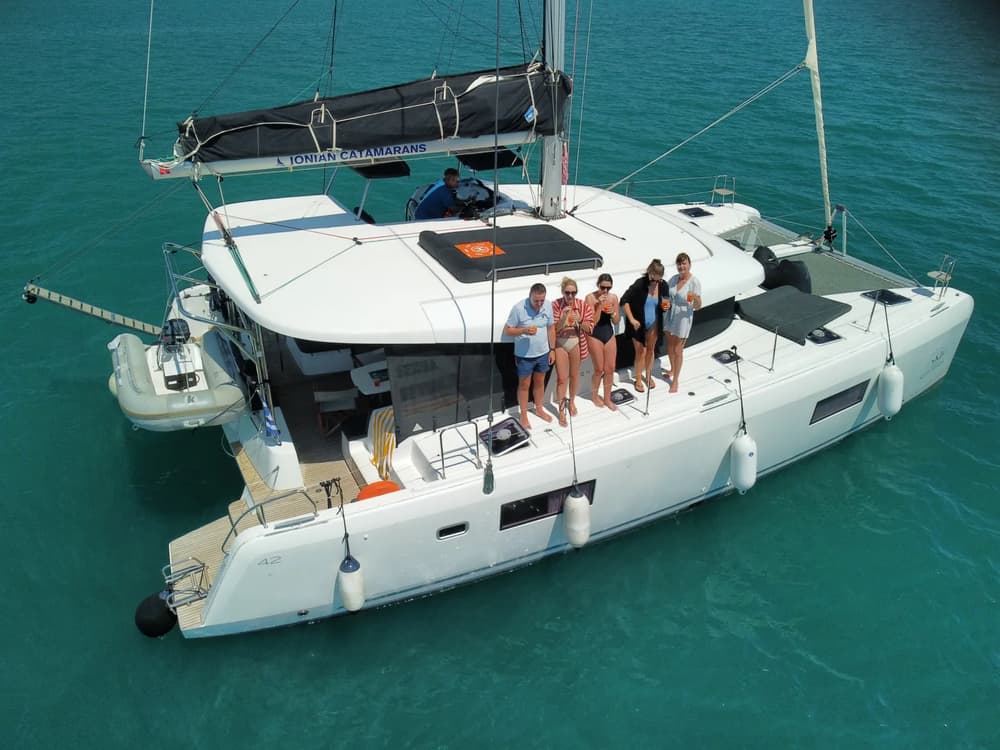
A sailing catamaran is a twin-hulled yacht powered by both engine and sails. It’s known for its smooth movement, eco-friendliness, and authentic sailing experience. Unlike a sailing monohull, a sailing catamaran offers more overall space, greater stability, and shallower draft, making it ideal for exploring stunning bays and shallow anchorages.
While sailing catamarans are often chosen for their efficiency and hands-on appeal, that doesn’t mean you have to compromise on comfort or luxury.
Modern sailing catamarans, especially large models such as the Aura 51, Lagoon 50, or Sunreef 60, feature lavish interiors, spacious flybridges, private en-suite cabins, and premium amenities that rival any motor yacht. These vessels bring five-star living to wind-powered cruising, combining sustainability with sheer indulgence.
> Book a Sailing Catamaran with Yacht4Less for the best price on the market
Sailing catamarans are ideal for travelers who love the art of sailing, couples, first-time charterers, families, or groups of friends looking for freedom, connection to nature, and the joy of cruising under sail.
Popular sailing catamaran models: Bali 4.6, Lagoon 46, Lagoon 42, Fountaine Pajot Astrea 42.
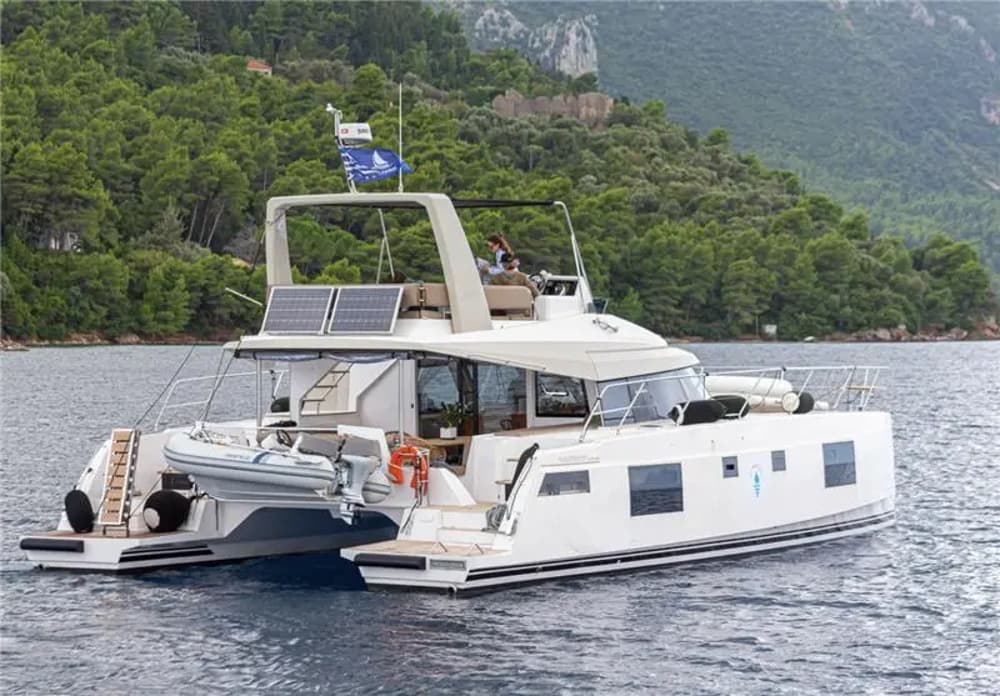
A power catamaran (or motor catamaran) ditches the sails and relies on twin engines for propulsion. Designed for speed and comfort, these yachts are the top choice for those who prefer effortless travel and modern luxury.
> Book a Power Catamaran with Yacht4Less for the best price on the market
Who is a Power Catamaran Best For?
Power catamarans are perfect for travelers who prioritize comfort, speed, and flexibility, especially families, first-time charterers, and luxury seekers.
Popular power catamaran models: Nautitech 47 Power, Lagoon Sixty 7, Bali Catspace MY.
|
|
|
|
|
|
|
|
|
|
|
|
|
|
|
|
|
|
|
|
|
|
|
|
|
|
|
|
|
|
|
|
Sailing catamarans and power catamarans both offer exceptional comfort and flexibility.
While sailing catamarans provide a peaceful, wind-powered experience ideal for relaxed cruising, power catamarans deliver speed and range for those who want to explore more islands in less time.
Both can be chartered bareboat, skippered, or fully crewed, and both can offer world-class luxury experiences depending on the model.
When it comes to charter pricing, sailing and power catamarans sit in two different categories. Even when the yachts are similar in size and layout, their daily running costs and hire rates vary noticeably.
Sailing catamarans are generally more affordable to charter. Several factors keep their costs lower:
Lower fuel consumption: Most of the cruising is done under sail, so fuel use is minimal. This reduces both the charter price and the running expenses during the week.
Wider fleet availability: Sailing catamarans are the most common catamarans in the global catamaran charter market, so higher availability often translates into more competitive pricing.
Economical for longer itineraries: If you plan to cover many miles, the reduced fuel dependency keeps overall costs predictable.
In short, sailing catamarans deliver great value for travellers who want space, comfort, and efficiency without stretching the budget.
Power catamarans typically come with a higher charter rate. This premium reflects:
High fuel consumption: They rely entirely on engines and can burn significantly more fuel, especially at higher cruising speeds. Fuel is usually an additional cost, making the overall weekly expense higher than on a sailing catamaran.
Higher build and maintenance costs: Power catamarans (or PowerCats) are more complex vessels with larger engines and systems, which influences their charter pricing.
Smaller fleet worldwide: Their limited availability, especially in certain destinations, often results in stronger demand and higher rates.
In short, power catamarans cost more to charter and to operate, but they offer unmatched speed and the ability to cover greater distances quickly and in style.
It depends on your priorities:
If you’re planning to explore the Greek islands or the Croatian coast, a sailing catamaran offers incredible value. For destinations like the Caribbean or Seychelles, where distances are greater, a power catamaran’s speed can make the extra cost worthwhile.
Sailing catamarans deliver a more active experience; you’ll feel the breeze, adjust sails, and steer your course. Many charter guests enjoy this hands-on connection with the sea.
Power catamarans provide a smoother, more effortless experience. With no sails to manage, guests can fully relax, enjoy the flybridge views, sunbathe on deck, or sip cocktails in the shaded lounge while the skipper handles navigation.
Both types are exceptionally stable, making them ideal for families or anyone prone to seasickness.
When it comes to eco-friendly sailing, sailing catamarans take the lead. They rely primarily on wind power and consume minimal fuel, especially in sunny, breezy destinations like Greece or the Caribbean. However, power catamarans are catching up fast; many brands, such as Sunreef and Fountaine Pajot, are integrating hybrid propulsion, solar panels, and energy-efficient systems into their latest models.
> Read More: Eco-Friendly & Sustainable Yachting: The Ultimate 2025 Guide
Best destinations for Sailing Catamarans:
> Read More: Best Catamarans for Charter in 2026: Top Sailing & Power Catamaran Brands
Many sailors use catamaran charters as a way to test a yacht before purchasing.
Whether you’re eyeing a Lagoon 46, a Bali 4.6, or a Lagoon 50, chartering lets you experience the yacht’s performance, comfort, and design in real conditions.
At Yacht4Less, we have access to all catamaran models available for charter worldwide - both sailing and power catamarans. You can charter the exact model you’re considering, the perfect way to ensure your next yacht is the right fit.
> Read More: From Yacht Charter to Yacht Ownership
Final Thoughts
Choosing between a sailing catamaran and a power catamaran depends on what kind of holiday you’re after.
Whatever your preference, Yacht4Less can help you plan the perfect catamaran charter, from skippered sailing adventures in Greece to luxury power catamaran charters in the Caribbean.
Ready to find your ideal catamaran charter?
Contact Yacht4Less today for a tailored quote and expert guidance from our yacht charter specialists.
The yachting community's most-asked questions, answered by our experts.
Sailing catamarans rely primarily on wind power with auxiliary engines, while power catamarans are motor-driven vessels designed for faster cruising speeds.
Sailing catamarans are more fuel-efficient and suitable for longer journeys, while power catamarans excel in speed and schedule flexibility.
Both offer similar layouts, but power catamarans typically provide larger living spaces and faster travel between destinations.
Power catamarans are often easier to operate because they do not require sail handling or wind navigation skills.
Power catamarans consume significantly more fuel, while sailing catamarans rely mainly on wind and have lower operating costs.
Yes. Sailing catamarans generate less carbon emissions since they primarily use wind propulsion.
Sailing enthusiasts prefer sailing catamarans for authentic sailing performance, while power catamarans appeal to travelers seeking comfort and speed.
Large cruising areas like the Bahamas, Croatia, and the Mediterranean are ideal for power catamarans due to their speed advantages.
Power catamaran charters usually start around €5,000 per week depending on yacht size and season.
The most popular sailing catamaran models for charter include the Lagoon 42, Fountaine Pajot Astrea 42, and Bali 4.1. These models are highly sought after for their stability, spacious "open-concept" living areas, and excellent fuel efficiency under sail. They offer a traditional wind-powered experience, perfect for those seeking a tranquil and eco-friendly Mediterranean or Caribbean holiday.







.webp)