Browse Boat Rental Deals in the Ionian
Browse Boat Rental Deals in the Aegean
Planning a yacht charter in Greece starts with one decision that shapes everything else: Ionian or Aegean?
Greece isn't a single sailing destination. Corfu and Lefkas sit in the Ionian Sea on Greece's west coast; Mykonos and Santorini belong to the Cyclades, part of the Aegean Sea to the east. Each side has its own wind patterns, sailing distances, landscapes and pace.
For first-time charterers, the choice of region often matters more than the choice of yacht.
> Read More: The Ultimate Guide for sailing in Greece
The Ionian is built for easy, stress-free cruising - think reliable 10-15 knot afternoon breezes, quick island hops, and glassy, sheltered anchorages. It’s the obvious choice for families, first-timers, or anyone looking for a gentle, low-stress week on the water.
The Aegean brings bigger landscapes, deeper history, and sportier sailing, though it varies wildly depending on the exact sailing ground you pick - it is not one sailing region. You’ll find smooth, protected cruising in the Saronic, pine-covered calm in the Sporades, Meltemi-charged open seas and whitewashed houses in the Cyclades, and medieval fortress ports across the Dodecanese.
With 15,000+ yachts across 50+ destinations, Yacht4Less can match you to the right region and boat for your group - with zero booking fees and full concierge support from booking to boarding.
Ionian vs Aegean at a Glance
* These are broad seasonal tendencies, not forecasts. Always check current marine conditions before departure.
The Ionian splits naturally into two cruising grounds. The South Ionian, sailed from Lefkas or Preveza, takes in Meganisi, Ithaca, and Kefalonia - mountainous, green islands with sheltered bays and short hops between them. The North Ionian, sailed from Corfu (or Syvota Mourtos on the mainland side), covers Corfu itself, Paxos and the coastline towards Preveza, with a similar mix of olive groves, cypress-covered hills and calm anchorages.
> Read More: Follow the Odyssey: Why This Is One of Greece's Greatest Yacht Charter Routes
Passages between islands are typically short, often 1-3 hours, leaving plenty of time for swimming stops and time ashore.
The dominant summer wind is the maistros, a northwesterly breeze of roughly 10-15 knots that usually builds through the afternoon and eases towards sunset.
The Ionian works well for:
Popular harbours can get busy in July and August. A one-week charter is best spent in either the North or South Ionian rather than trying to cover both - a two-week charter gives you enough time to combine the two.
> Read More: Top 5 Reasons to Go Sailing in the Ionian Islands
.webp)
Lefkas/Preveza → Meganisi → Sivota (Lefkas Island) → Fiskardo (Kefalonia) → Kioni (Ithaca) → Atokos → Kalamos → return to base
As mentioned, the Ionian isn't one cruising ground - it splits into a South Ionian, sailed from Lefkas or Preveza, and a North Ionian, sailed from Corfu. A week in the South Ionian sets sail from Lefkas or Preveza down to Meganisi and Sivota on southern Lefkas, before crossing over to Fiskardo on Kefalonia. From there, the route makes short hops to Kioni on Ithaca, the island of Atokos, and peaceful Kalamos before looping back to base. While Zakynthos's Blue Caves sit further south, attempting to add them is not recommended for a 7-day sailing itinerary.
> Read More: Sailing holidays Lefkas | Sail South Ionian (2026 Guide)
Passages rarely exceed three hours, leaving plenty of time for swimming and slower mornings - why this is the classic first-timer and family route in Greece.
Corfu → Paxos → Antipaxos → Syvota → Parga → Corfu
A week from Corfu covers the North Ionian, taking in Corfu's own coastline, Paxos and Antipaxos, and the sheltered mainland water with coastal towns such as Parga and Syvota. Anchorages here are just as short a hop apart, with the same green, olive-grove scenery as the south.
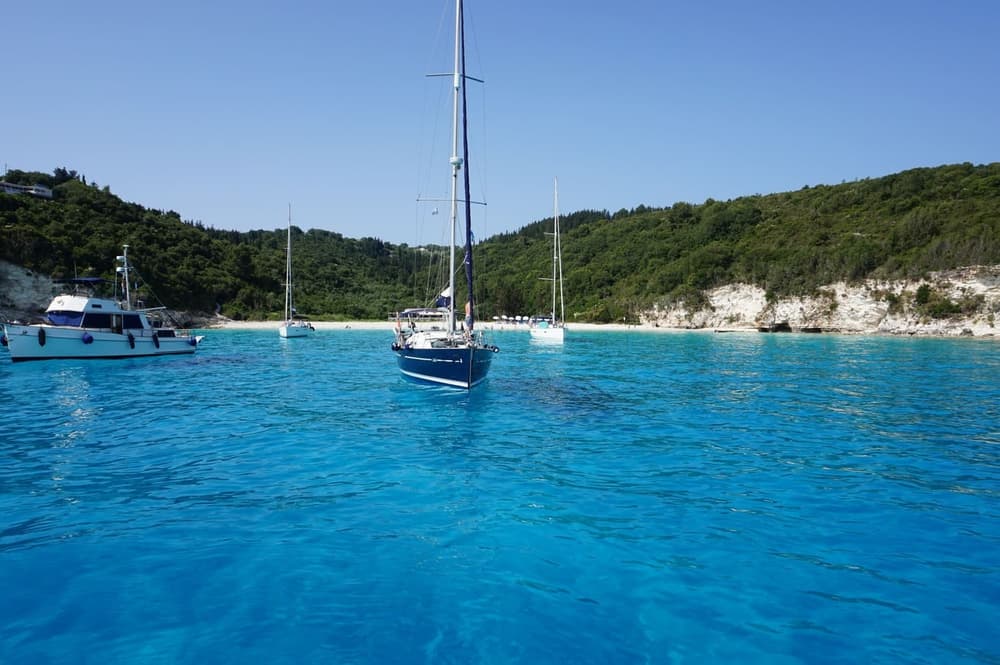
Starting from Corfu pairs easy airport access with the electric-blue waters of Paxos and Antipaxos, coastal Parga, and rich Venetian heritage.
> Read More: Avoid the Crowds: The Best Alternative Yacht Charter Bases in the Ionian
The biggest mistake charterers make is treating the entire Aegean as if it were just the Cyclades. In reality, there are four distinct cruising regions.
Starting near Athens, the Saronic Gulf covers Aegina, Poros, Hydra and Spetses. Relatively protected waters and lighter winds (10-15 knots) make it one of the best options for combining an Athens city break with family sailing.
> Read More: Saronic Sailing with friends: A yacht charter experience from Athens
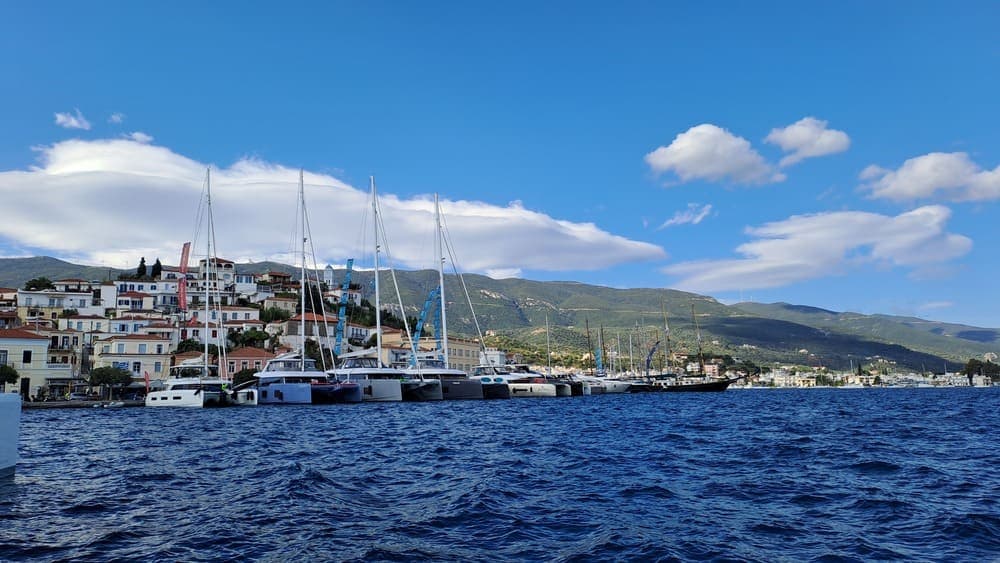
Saronic 7-Day Sailing Itinerary
Athens → Aegina → Poros → Dokos → Hydra → Spetses → Salamina → return to Athens
From Athens, a week takes in Aegina's temple and pistachio groves, Poros's town channel and hot springs, car-free Hydra, and Spetses's neoclassical mansions, with a possible stop at Salamina on the way back.
Short distances and light winds make this an easy pairing with a few days in Athens.
> Read More: Sailing itinerary from Athens: 7 & 14-day Saronic Gulf yacht charter route
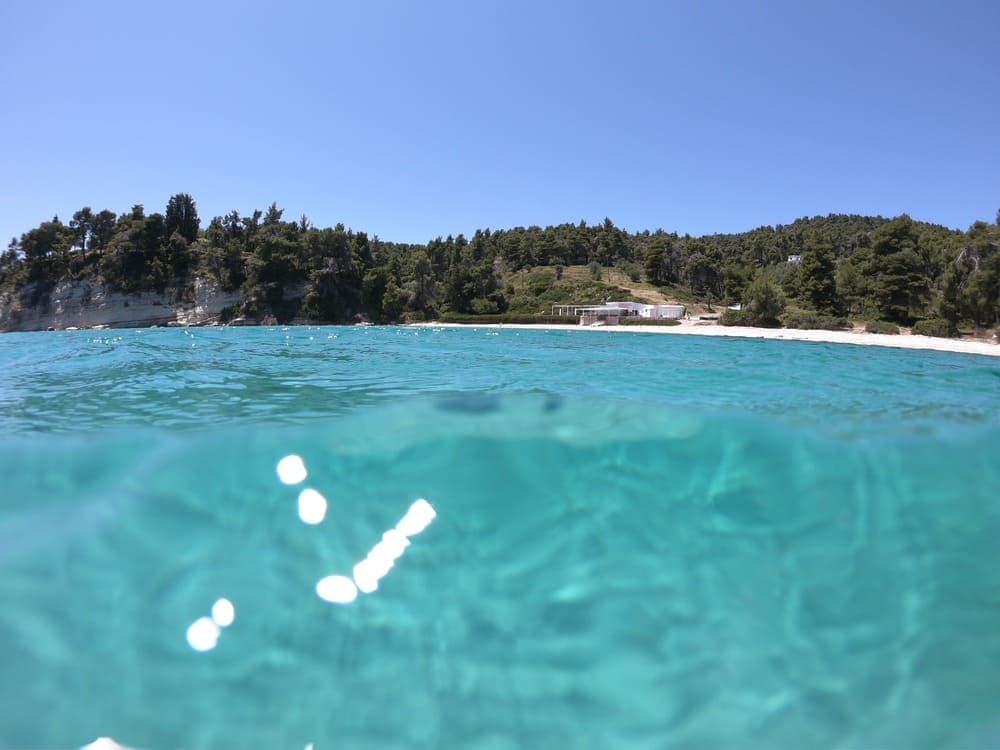
Charters typically start from Skiathos or Volos, running through Skiathos, Skopelos and Alonissos. Skopelos will be familiar to fans of Mamma Mia!, filmed largely on the island, with several of its beaches and the famous chapel still popular stops for charter guests. Beyond the film-location appeal, expect pine-covered islands, beaches and a quieter atmosphere - this sailing region suits families and a slower-paced, nature-first week.
Sporades 7-Day Sailing Itinerary
Skiathos/Volos → Skiathos town → Glossa (Skopelos) → Skopelos town → Alonissos → Peristera → Kyra Panagia → return to base
Starting from Skiathos or Volos, the route covers Skiathos town, Skopelos (Glossa and Skopelos town), and Alonissos's marine park, with optional stops at Peristera or Kyra Panagia.
> Read More: The Ultimate Guide: Sailing in the Sporades islands
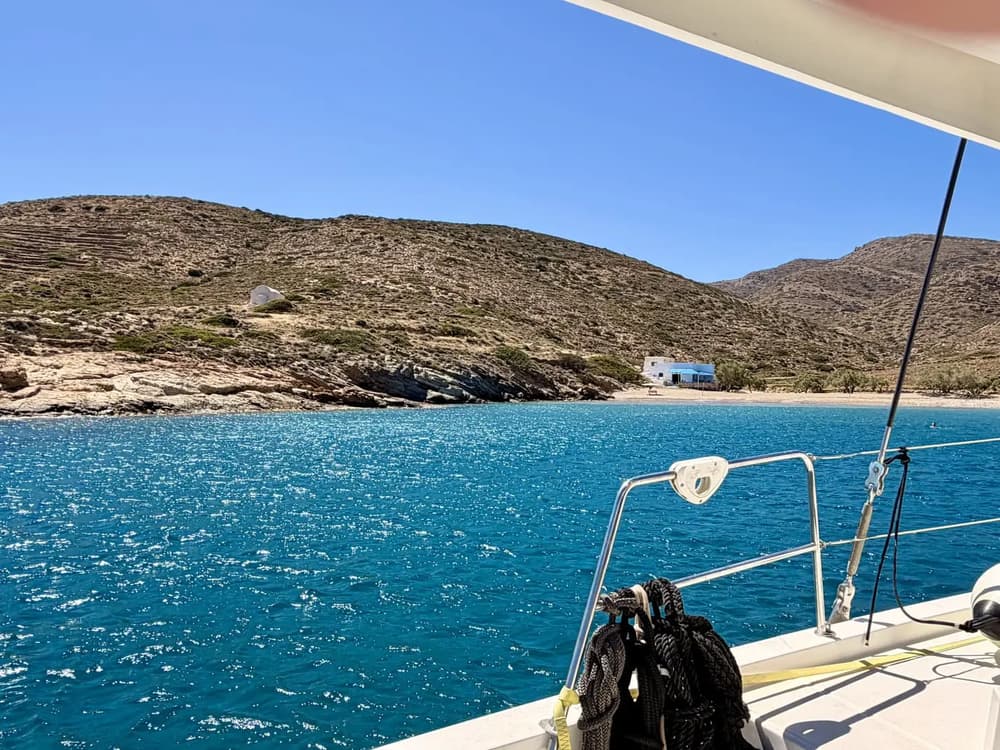
The Cyclades deliver the Greek islands most travellers' picture: Mykonos, Paros, Naxos, Koufonisi and Santorini, with whitewashed villages, bougainvilleas and dramatic, dry landscapes.
They're also the most demanding region to sail. The meltemi, a seasonal northerly wind, peaks in July and August and can bring sustained winds of 25-30+ knots over several days. This can mean route changes, longer passages, or waiting out conditions in port.
The Cyclades suit experienced sailors or charters with a professional skipper or full crew, especially during peak meltemi season (mid-July to late August). A fully crewed yacht takes the pressure off entirely - a professional skipper reads the meltemi and adjusts the route in real time, while the rest of the crew handles everything from provisioning to serving dinner at anchor, so you get the iconic Cyclades scenery without the stress of managing challenging conditions yourself.
Thinking about the Cyclades? Browse fully crewed yacht charters in the Cyclades and let an experienced crew handle the meltemi while you enjoy the islands.
.jpg)
Cyclades 7-Day Sailing Itinerary
Paros → Sikinos → Iraklia → Koufonisia → Naxos (Kalados) → South Paros (Faraggas) → return to Paroikia, Paros
From Paros, the route runs south to Sikinos, then into the Small Cyclades via Iraklia and Koufonisia, across to southern Naxos, and back along Paros's south coast before returning to base.
This route favours remote beaches, uninhabited islets and low-key tavernas over the bigger Cycladic names, making it a strong pick for charterers who've done Santorini or Mykonos before and want something quieter.
> Read More: Sail Small Cyclades: Greek islands off the beaten path
Charters commonly start from Kos or Rhodes, opening routes to Symi, Patmos, Kalymnos, Nisyros and beyond. The region pairs beaches with Greek, Byzantine, medieval and Ottoman heritage - a strong pick for repeat Greece visitors after history and cultural variety.
Dodecanese 7-Day Sailing Itinerary
Kos/Rhodes → Nisyros → Symi → Tilos → Kalymnos → Patmos → return to base
From Kos or Rhodes, the route takes in Nisyros's volcanic crater, Symi's pastel harbour, quieter Tilos or Kalymnos, and Patmos, site of the Cave of the Apocalypse.
Longer sailing days suit charterers after a heritage-rich week rather than a beach-first one.
Wind is the single biggest practical difference between the two seas.
The Ionian's maistros is a lighter northwesterly breeze, typically 10-15 knots, building in the afternoon.
The Aegean's meltemi is stronger and more persistent, particularly in the Cyclades in July and August, where it can exceed 30 knots for days at a time.
Neither wind pattern is guaranteed. Always check current marine forecasts and follow your operator or skipper's advice before setting out.
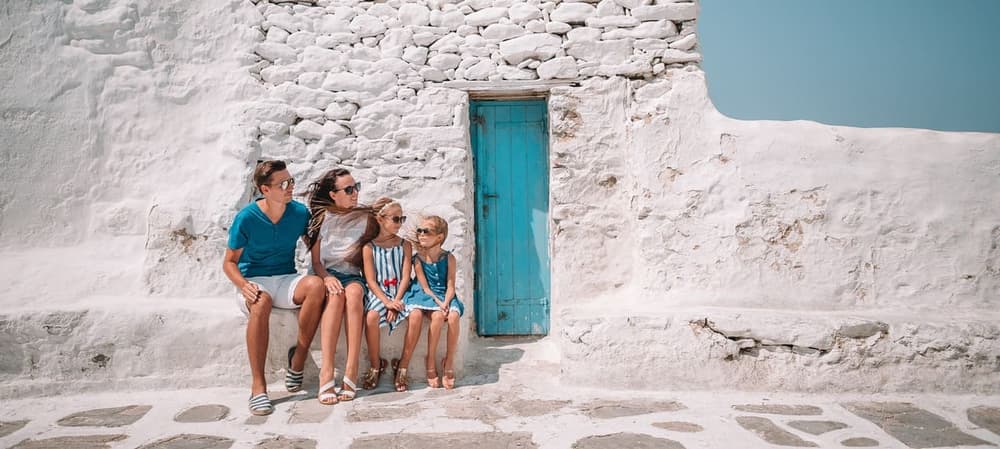
Ionian: Choose this if you want easy, low-wind sailing, short passages, and calm, sheltered bays ideal for beginners or families.
Saronic Gulf (Aegean): Choose this if you want to sail directly from Athens, avoid heavy open-sea swells, and explore historic island towns like Hydra and Spetses.
Sporades (Aegean): Choose this if you want pine forests reaching all the way to the shoreline, protected marine sanctuaries, and a cooler, greener setting.
Cyclades (Aegean): Choose this if iconic blue-and-white villages are a must and you can handle strong summer Meltemi winds and open-water sailing (or plan to hire a skipper or full crew).
Dodecanese (Aegean): Choose this if you prefer medieval fortress ports, a blend of Greek and Ottoman history, and warm sailing conditions late into the autumn.
The yachting community's most-asked questions, answered by our experts.
The Ionian is generally the easiest all-round choice, with the Saronic Gulf a strong Aegean-side alternative.
Yes, generally. The Ionian's maistros is typically lighter than the meltemi that affects exposed Aegean regions like the Cyclades, though conditions vary by date and location.
Yes, particularly with a professional skipper or crew and a flexible itinerary. Families wanting easier sailing conditions often prefer the Ionian, Saronic Gulf or Sporades instead.
The maistros is a lighter northwesterly wind typical of the Ionian (around 10-15 knots). The meltemi is a stronger northerly wind common in the Aegean, especially the Cyclades, reaching 25-30+ knots at its summer peak.
June and September combine warm weather with lighter crowds. July and August are livelier but coincide with the strongest meltemi winds in exposed Aegean regions.
We generally don't recommend it. At 65 nautical miles apart, combining them means spending most of your week on long open-sea passages. We only advise it if weather conditions are exceptionally favorable, you have a professional skipper or crew on board, and your group genuinely enjoys long days at sea over island time.